
News and Analysis | Dem Convention Audit
Michigan Democrats' Endorsement Convention Meltdown
The Michigan Democratic Party's April 2026 endorsement convention is now facing audit demands from inside the party after alleged remote voting, misrecorded ballots, shared phone numbers, and a narrow MSU Trustee endorsement fight.
What Matters First
Democrats wanted unity. They got an audit fight.
The political damage is already real because the loudest calls for accountability are not coming only from Republicans.
Michigan Democrats hoped their April endorsement convention would project unity heading into November. Instead, it has produced a widening fight over voting irregularities, an appeal from a losing candidate, calls for an independent audit from inside the party, and a new theme: Democrats cannot even trust the results of their own convention.
The dispute centers on the Michigan Democratic Party's April 19 endorsement convention at Huntington Place in Detroit, where thousands of delegates gathered to choose the party's endorsed candidates for secretary of state, attorney general, and other statewide elected positions.
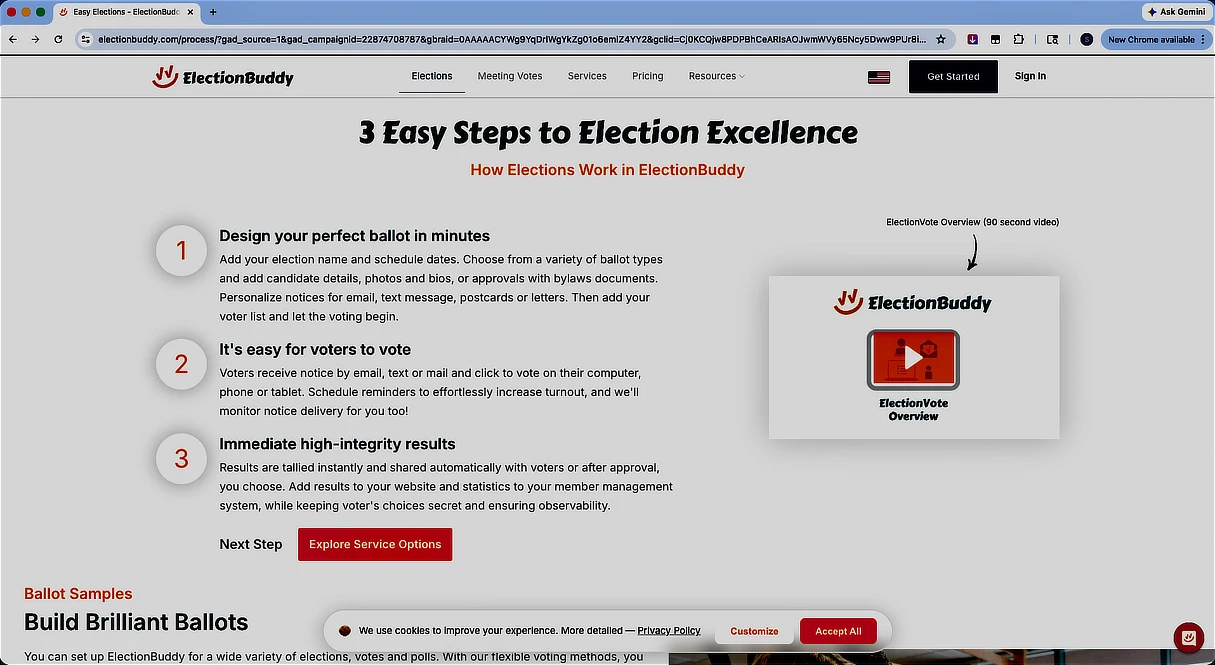
But the convention's voting process, conducted through the ElectionBuddy platform on delegates' personal phones, is now under intense scrutiny.
What Happened
The convention's phone-based voting process is now under scrutiny
The dispute centers on the party's April 19 endorsement convention at Huntington Place in Detroit.
The Michigan Democratic Party's April 19 endorsement convention at Huntington Place in Detroit brought together thousands of delegates to choose the party's endorsed candidates for secretary of state, attorney general, and other statewide elected positions. Lt. Gov. Garlin Gilchrist won the party's endorsement for secretary of state, Washtenaw County Prosecutor Eli Savit won the endorsement for attorney general, and progressive candidates also scored wins in several university board races.
But the convention's voting process, conducted through the ElectionBuddy platform on delegates' personal phones, is now under intense scrutiny.
State Sen. Sylvia Santana, a Detroit Democrat who narrowly lost a race for the Michigan State University Board of Trustees endorsement, filed a 53-page appeal alleging "material errors" in the vote-counting process and asking for an outside audit. According to reports from The Detroit News via AOL, Michigan Advance, WKAR, and others, Santana finished roughly 15 votes behind Kelly Tebay Zemke for the second of two MSU Trustee endorsement slots.
Santana Appeal
Santana says the party failed to enforce its own in-person rule
Delegates were required to be physically present at Huntington Place to be credentialed and vote.
Santana's appeal argues that the party failed to enforce its own in-person voting rule. Delegates were required to be physically present at Huntington Place to be credentialed and vote. But Santana's campaign reportedly reviewed location data and alleged that more than 200 votes were cast from outside the convention center.
That allegation alone is larger than the reported margin in the MSU Trustee contest.
The appeal reportedly alleges additional problems: 302 people who cast votes were not on the party's master voting list, 208 voters shared a phone number with at least one other voter, six members were attached to a single phone number, and at least 16 votes were recorded incorrectly or not recorded at all. The filing also reportedly alleged voting activity from as far away as Montenegro and Antrim County.
Those claims have not yet been validated by a public independent audit, so they should be treated as allegations. But the political damage is already real because the loudest calls for accountability are not coming only from Republicans.
Democrats Demand Audit
The loudest audit demands are not only coming from Republicans
Democratic candidates and elected officials have raised concerns about vote attribution, off-site voting, and transparency.
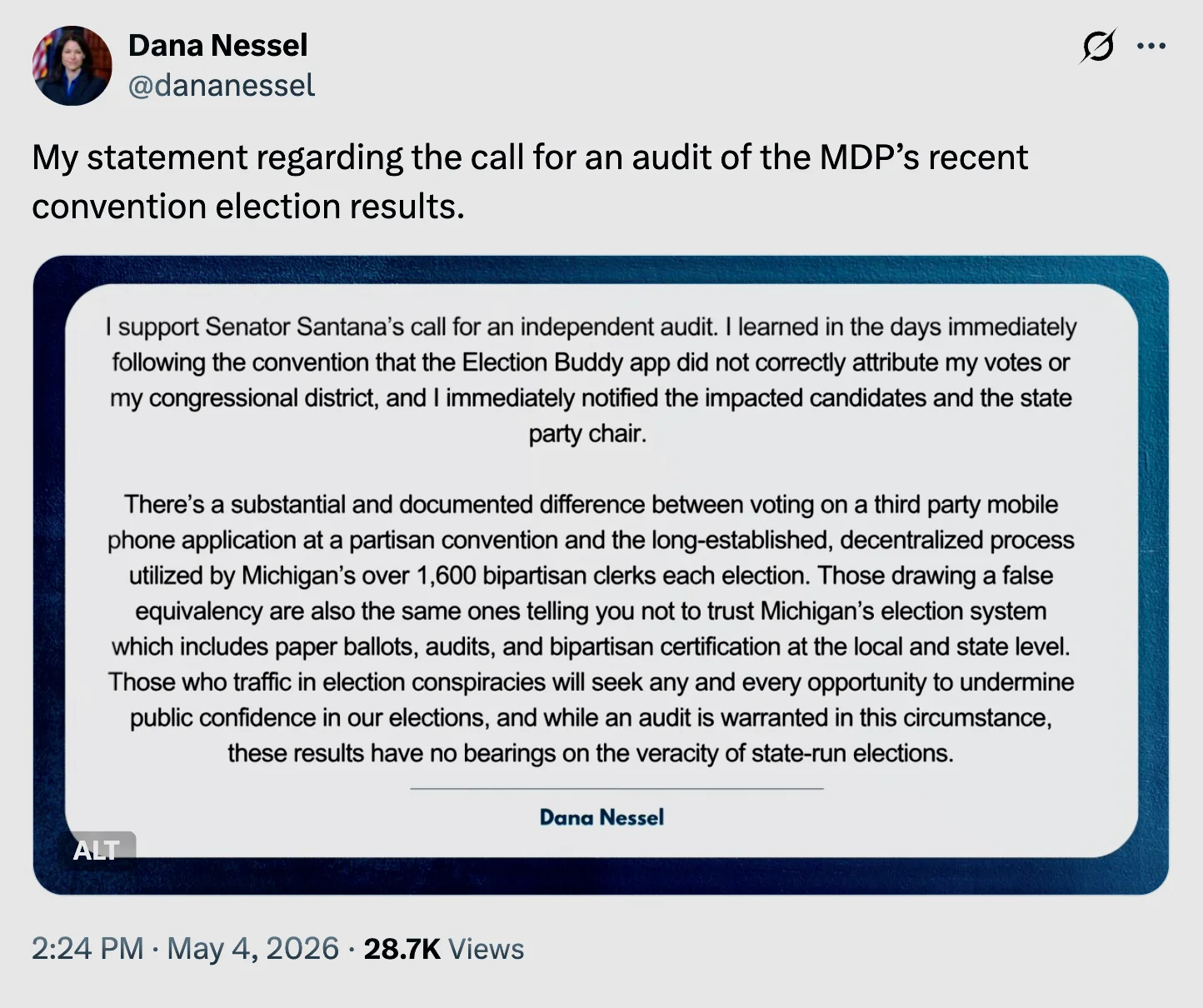
Attorney General Dana Nessel, a Democrat, backed the call for an independent audit after saying the ElectionBuddy system did not correctly attribute her votes or congressional district. The Detroit News report published by AOL said unofficial records allegedly attributed an attorney general vote to Savit even though Nessel had abstained, according to a spokeswoman.
Oakland County Prosecutor Karen McDonald, who lost the attorney general endorsement contest to Savit, has also supported an audit, saying votes were incorrectly recorded, people voted offsite, and some votes were not recorded at all.
Michigan Advance reported that Ingham County Clerk Barb Byrum has called for a return to paper ballots or a primary system, while Democratic candidate Suzanna Shkreli questioned electronic voting, enforcement of the in-person rule, and transparency, though she did not plan to contest the results.
Damage Control
Runestad says Democrats are doing damage control
The New York Post picked up the story this week, quoting Michigan Republican Party Chair Jim Runestad.
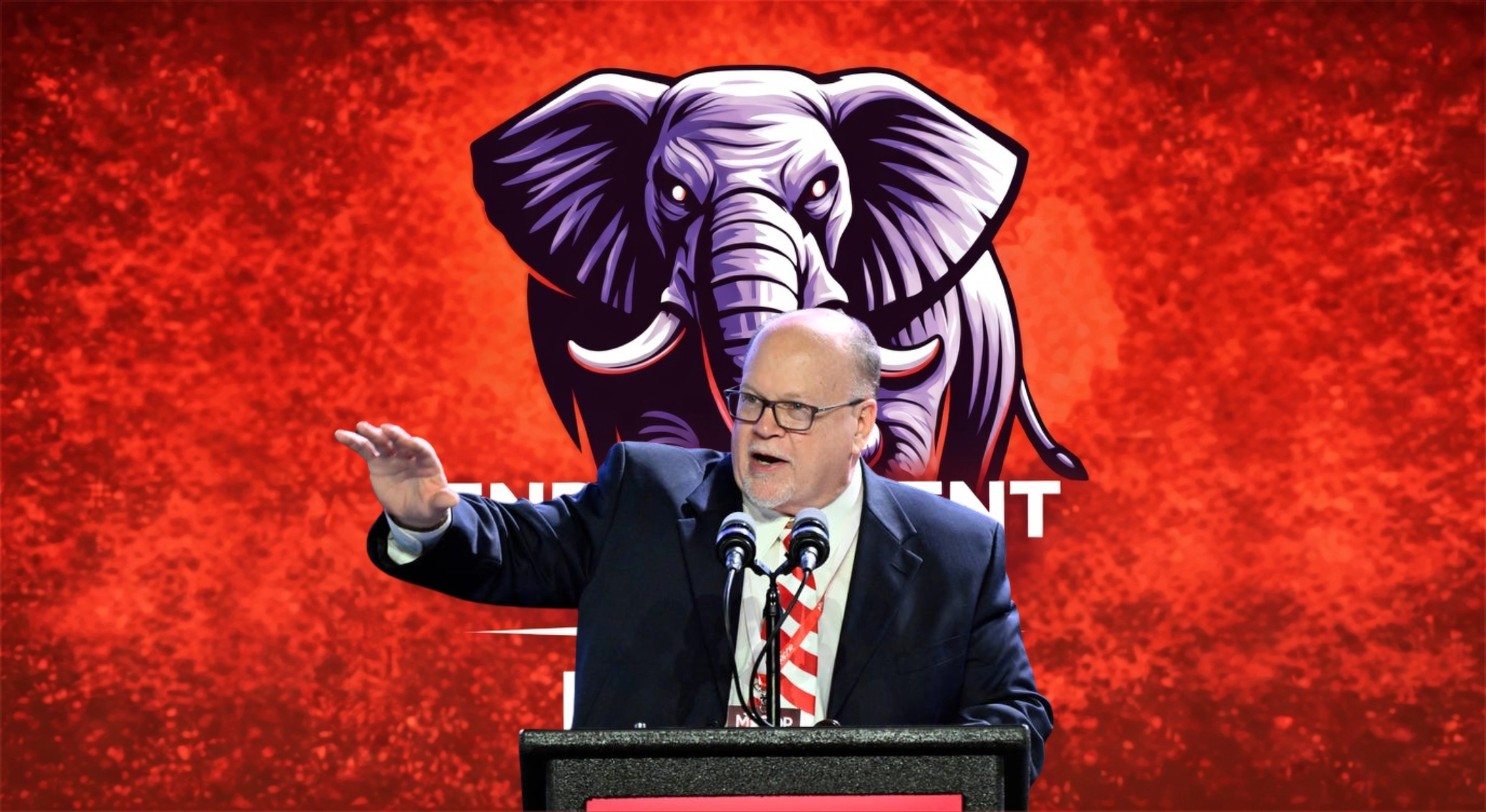
Jim Runestad | Michigan Republican Party
"Even Dana Nessel and Sylvia Santana are demanding an audit of the Democrat convention. Think about that. Their own side doesn't trust what happened. Chaos. Mismanagement. And now - damage control." Runestad to the New York Post
The New York Post quoted Runestad saying Democrats were doing "damage control" after Nessel and Santana demanded an audit.
Runestad's comment captures the problem now facing Michigan Democrats. The party's own candidates and elected officials are questioning whether its endorsement convention complied with its rules, whether votes were properly attributed, and whether the outcome of at least one race may have been affected.
The Michigan GOP held its own endorsement convention earlier this cycle; our full list of 2026 Republican convention-endorsed candidates is available here.
Benson Optics
The election-administration optics are especially awkward
The convention was party-run, but the party's gubernatorial candidate is also Michigan's secretary of state.
That is especially awkward when a party's gubernatorial candidate is also the state official in charge of Michigan elections. Jocelyn Benson is Michigan's sitting Secretary of State and a Democratic candidate for governor. Her office says she has overseen Michigan elections as the state's chief election official, and on May 6, 2026, the Department of State released a firewall policy meant to address potential conflicts arising from her dual role as secretary and candidate.
To be clear, this was not a government-run election administered by local clerks. It was an internal party endorsement convention. Nessel herself has drawn that distinction, emphasizing that the convention problems should not be conflated with Michigan's official election system.
But the distinction may not rescue Democrats from the optics. The party used a phone-based voting system. It required delegates to be present in person. It allegedly counted votes from people who were not present. It allegedly had voters sharing phone numbers. It allegedly misattributed votes. And now Democrats are asking Democrats to audit Democrats.
Audit Questions
A transparent audit is the only way out
The reported margin is what gives the allegations their force.
The narrow MSU Trustee race makes the problem more than procedural. If Santana's allegation is accurate that more than 200 remote votes were cast in a race decided by roughly 15 votes, then the question is not merely whether the convention was messy. The question is whether the wrong candidate received the endorsement.
An independent audit would not only need to recount the votes. It would need to answer whether every counted ballot can be matched to an eligible, credentialed, in-person delegate; whether any access codes were duplicated or improperly distributed; whether shared phone numbers allowed multiple votes to be cast by the same person; whether location data was accurately interpreted; and whether weighted votes were calculated correctly under party rules.
Until those questions are answered, the Michigan Democratic Party has a credibility problem of its own making. The party wanted a convention that showcased energy, organization, and momentum. Instead, it has handed its critics a simpler story: when Democrats ran their own high-stakes vote, some of their own candidates say the process broke down.
And if the party wants that story to change, "damage control" will not be enough. Only a transparent audit can do that.
Sources And Method
This article distinguishes reported allegations from confirmed facts
Sources are included here for readers who want to review the party documents, appeal coverage, and public statements behind the article.
- Michigan Democratic Party: Convention page, Call to Convention PDF, and Rules Committee Report PDF.
- Santana appeal and audit demands: The Detroit News via AOL, Michigan Advance, Michigan Advance on Byrum and Shkreli, WKAR, and Michigan Chronicle.
- Convention results context: Michigan Advance, FOX 2 Detroit, and Benzie Democrats.
- Republican response: New York Post interview with Jim Runestad.
- Jocelyn Benson role and firewall policy: Michigan Secretary of State biography, May 6 MDOS firewall release, and Michigan Advance coverage.