What Republicans should understand after August 4
Socialism is now a major force in Michigan’s Democratic Party.
DSA-backed candidates and allied progressives won statewide, defeated Democratic incumbents and advanced from Congress to city hall. The results give Republicans a clearer ideological contrast—but also a movement with demonstrated electoral strength.
The direct answer
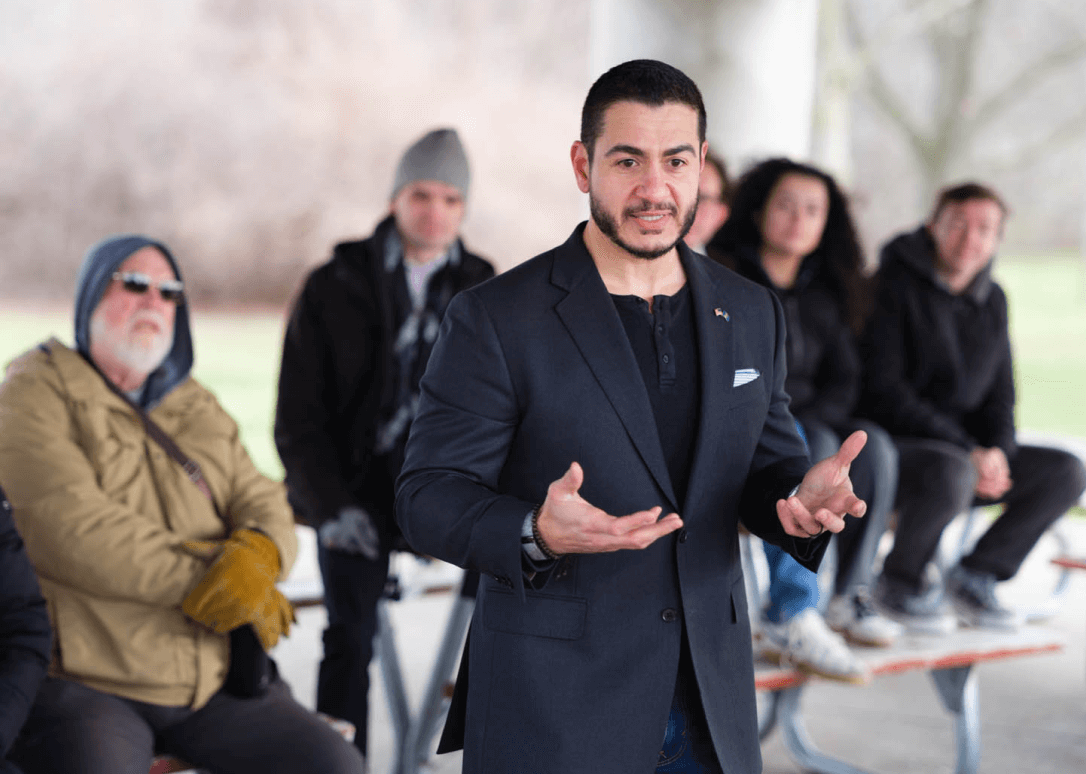
Michigan’s socialist left now reaches from a statewide nominee and congressional delegation to Lansing and local government.
The socialist left is no longer a protest faction. It now decides statewide and congressional nominees, removes Democratic incumbents and builds a bench through Lansing and local government. Republicans have a clearer ideological contrast—and a serious opponent.
Michigan’s August 4 Democratic primaries produced consequential progressive victories at nearly every level of the ballot. Abdul El-Sayed won the Democratic nomination for U.S. Senate. William Lawrence won the nomination in the competitive 7th Congressional District. Donavan McKinney defeated an incumbent member of Congress in the 13th District, and Rashida Tlaib easily won another Democratic primary in the 12th District.
The coalition also won contested Michigan Senate, Michigan House and Ann Arbor municipal races. For Republicans, the most important evidence came from contests that cannot be dismissed as routine victories in safely Democratic territory: El-Sayed won statewide despite an extraordinary spending disadvantage, and Sunrise Movement co-founder Lawrence won in a Republican-held swing district where Democrats have traditionally emphasized moderation and general-election positioning.
The victories were interconnected. Tlaib supported El-Sayed, Lawrence and McKinney; DSA supplied candidates and campaign infrastructure; and the Working Families Party, Our Revolution, the Michigan Democratic Party Progressive Caucus, Detroit Action, labor organizations and the Uncommitted movement extended the coalition across additional races.
The strategic finding
The Democratic left won through the ballot.
One statewide nomination could be treated as an isolated result. Victories across four levels of the ballot show Republicans a movement with candidates, endorsers and organizing capacity in multiple kinds of races.
-
Statewide
El-Sayed won despite a nearly 10-to-1 spending imbalance.
The U.S. Senate primary showed Republicans that a progressive nominee can overcome major institutional and financial disadvantages before entering a statewide general election.
-
Congress
A battleground nominee, an incumbent defeat and a protected base.
William Lawrence won the nomination to challenge Republican U.S. Rep. Tom Barrett in MI-07; Donavan McKinney defeated U.S. Rep. Shri Thanedar in MI-13; Rashida Tlaib retained MI-12; and Christina Bertrand Hines, who campaigns as Christina Hines, won the open MI-10 nomination.
-
Legislature
Detroit-area insurgents joined a wider statewide network.
Chris Gilmer-Hill and Abbas Alawieh defeated Democratic incumbents, while progressive-organization-backed candidates built a wider bench across the Lower Peninsula.
-
Municipal
Ann Arbor placed a democratic socialist on the path to City Hall.
Yousef Rabhi defeated the incumbent mayor, and Ryan Bartholomew added a contested City Council nomination—even as three other aligned council candidates lost and exposed the coalition’s limits.
The highest-stakes Republican implications
The nominees Republicans will face.
The most consequential results involved a statewide nominee, a Republican-held battleground, two Democratic incumbents and an open competitive seat.
U.S. Senate · Statewide
48.5% Approximate El-Sayed vote shareMovement progressive · allied statewide nominee
Abdul El-Sayed overcame an extraordinary spending disadvantage.
El-Sayed narrowly defeated U.S. Rep. Haley Stevens, who received approximately 47.5 percent. State Sen. Mallory McMorrow had withdrawn but remained on the ballot and received the balance.
El-Sayed ran on Medicare for All, higher taxes on billionaires, restrictions on corporate influence in politics and opposition to unconditional U.S. military support for Israel. His endorsers included Bernie Sanders, Alexandria Ocasio-Cortez, Elizabeth Warren, the United Auto Workers, the Working Families Party and the Michigan Democratic Party Progressive Caucus.
Stevens had support from Gov. Gretchen Whitmer, Senate Democratic Leader Chuck Schumer and other institutional Democrats. The Associated Press reported close to $50 million in outside spending promoting Stevens before Election Day, including nearly $30 million from AIPAC and affiliated groups. Axios subsequently calculated that El-Sayed had been outspent by nearly 10-to-1 overall.
The closing television imbalance was similarly stark: AdImpact data reported by Axios showed approximately $26.9 million in pro-Stevens super PAC reservations from July 1 through Election Day, compared with approximately $2.1 million on El-Sayed’s side. El-Sayed won after trailing in late public polling.
Republicans now have a clear statewide contrast with El-Sayed’s agenda, but his primary performance warns against treating him as a weak nominee simply because his positions are well to the left of the Republican ticket.
Reported overall spending relationship
Relative scale based on Axios’s post-primary calculation; this is not a dollar-total chart.
U.S. House · MI-07
+14 Approximate lead in percentage pointsProgressive and DSA-adjacent
William Lawrence carried an openly progressive platform into a battleground district.
Lawrence received approximately 43.7 percent. Former U.S. Ambassador to Ukraine Bridget Brink received approximately 28.8 percent, and former Navy SEAL Matt Maasdam received approximately 27.6 percent.
A co-founder of the Sunrise Movement who has previously been associated with DSA, Lawrence supported Medicare for All, stronger environmental protections, limits on artificial-intelligence data centers, higher taxes on billionaires and an end to U.S. arms transfers to Israel. He entered the final phase with less money raised than either opponent.
MI-07 is represented by Republican Tom Barrett and is politically different from Michigan’s safely Democratic congressional districts. Lawrence gives Republicans a direct contrast on healthcare, energy, taxes, Israel and data-center development. His 14-point primary victory also warns that his ideological profile did not prevent him from defeating two better-funded, conventionally credentialed Democrats.
U.S. House · MI-13
51.9% Approximate McKinney vote shareDSA member and endorsed candidate
Donavan McKinney proved that a DSA-backed challenger could remove an incumbent member of Congress.
McKinney defeated U.S. Rep. Shri Thanedar, who received approximately 48.1 percent. Supported by Sanders, Tlaib, the Working Families Party and the Michigan Democratic Party Progressive Caucus, McKinney transferred a safely Democratic congressional seat from a wealthy incumbent to a candidate directly connected to Michigan’s organized socialist movement. MI-13 may offer Republicans little immediate opportunity to flip the seat, but the result increases the socialist bloc’s influence in Michigan’s congressional delegation.
U.S. House · MI-12
73.9% Approximate Tlaib vote shareDemocratic socialist incumbent
Rashida Tlaib preserved the coalition’s most influential elected base.
Tlaib won a three-candidate primary by a wide margin. This was a defensive result rather than an insurgent gain, but it preserved the seat of Michigan’s most nationally prominent democratic socialist while candidates she supported—including El-Sayed, Lawrence and McKinney—won elsewhere. Republicans should view her not only as a secure incumbent but also as an organizer and endorser whose influence now extends across multiple races.
U.S. House · MI-10
47.0% Approximate Hines vote shareDistrict-relative progressive · institutional coalition
Christina Hines won an open-seat primary using progressive economic themes.
Hines received approximately 47.0 percent, followed by Eric Chung at approximately 29.7 percent and Pontiac Mayor Tim Greimel at approximately 23.3 percent. She was not endorsed by DSA, the Working Families Party, Our Revolution or the Progressive Caucus; her support instead came from organizations including EMILY’s List, End Citizens United, Giffords and Elect Democratic Women.
Her platform described healthcare as a human right, rejected corporate PAC contributions, supported the PRO Act, a stronger National Labor Relations Board, a higher minimum wage and paid family leave, and opposed corporate price-gouging. She also took more moderate positions on several issues and did not support Medicare for All.
Hines gives Republicans several economic and cultural contrasts. Her victory shows how progressive economic ideas can be packaged inside a more institutional Democratic campaign in competitive Macomb and Oakland County communities.
The Democratic bench below Congress
The organizing network reached into state and local races.
For Republicans, these races matter because state legislators and local officials become future candidates, endorsers and organizers. They were not ideologically identical, and the table preserves those distinctions.
| Candidate | Contest | Result | Why included |
|---|---|---|---|
| Abdul El-Sayed | U.S. Senate | 48.5% | Movement progressive; major labor and progressive endorsements |
| William Lawrence | U.S. House · MI-07 | 43.7% | Sunrise co-founder; progressive and DSA-adjacent |
| Donavan McKinney | U.S. House · MI-13 | 51.9% | DSA member and endorsed challenger |
| Rashida Tlaib | U.S. House · MI-12 | 73.9% | Democratic socialist incumbent |
| Christina Hines | U.S. House · MI-10 | 47.0% | District-relative progressive economic platform |
| Chris Gilmer-Hill | Michigan House · HD-08 | 48.8% | Democratic socialist; DSA, Our Revolution and Progressive Caucus backed |
| Yousef Rabhi | Ann Arbor mayor | 55% | Self-described democratic socialist; Huron Valley DSA backed |
| Ryan Bartholomew | Ann Arbor Council · Ward 3 | 53% | Self-described democratic socialist; progressive-organization backed |
| Abbas Alawieh | Michigan Senate · SD-02 | 58.9% | Uncommitted co-founder and movement progressive |
| Rashida Harrison | Michigan Senate · SD-28 | 41.8% | Working Families Party and Detroit Action backed |
| Abbie Groff-Blaszak | Michigan Senate · SD-29 | 47.7% | Worker-centered progressive campaign |
| Tonya Myers Phillips | Michigan House · HD-07 | 63% | Working Families Party and Detroit Action backed |
| Joanna Whaley | Michigan House · HD-02 | 56% | Our Revolution and Progressive Caucus backed |
| Kimberly Fisher | Michigan House · HD-11 | 63% | Working Families Party and Progressive Caucus backed |
| Jimmie Wilson Jr. | Michigan House · HD-32 | 79% | Progressive Caucus-backed incumbent |
| Jen Strebs | Michigan House · HD-41 | 56% | Our Revolution and Progressive Caucus backed |
| Lily Cheng-Schulting | Michigan House · HD-80 | 40% | Progressive Caucus backed |
| Ann Marie Horseman | Michigan House · HD-95 | 80% | Progressive Caucus backed |
The coalition ranges from formal DSA members to allied progressives. The final column identifies the connection behind each candidate’s inclusion.
Michigan House · HD-08
48.8% Approximate Gilmer-Hill vote shareDemocratic socialist · incumbent defeat
Chris Gilmer-Hill gave DSA another successful Detroit-area incumbent challenge.
Gilmer-Hill defeated incumbent state Rep. Helena Scott, who received 43.0 percent, while two additional candidates divided the remainder. Together with McKinney’s congressional victory, the result gave DSA-backed challengers two incumbent defeats in Detroit-area districts on the same night. The immediate general-election opportunity for Republicans may be limited, but the organizational consequence is not: DSA demonstrated that it can recruit challengers and remove Democratic officeholders.
Ann Arbor mayor
55% Approximate Rabhi vote shareSelf-described democratic socialist
Yousef Rabhi defeated Ann Arbor’s incumbent mayor.
The former state representative and Washtenaw County commissioner defeated incumbent Mayor Christopher Taylor by approximately 10 points. Rabhi emphasized public and permanently affordable housing, public services, municipal power and reducing reliance on outside consultants.
Because no other candidate qualified for the November ballot, Rabhi is expected to be unopposed apart from any write-in candidacy. The primary therefore placed a self-described democratic socialist in position to become mayor, giving the movement an executive office and a municipal policy laboratory in one of Michigan’s best-known cities.
Michigan Senate · SD-02
58.9–41.1 Approximate Alawieh–Byrnes resultMovement progressive · Uncommitted coalition
Abbas Alawieh defeated a sitting state representative.
Alawieh, a former aide to Tlaib and former U.S. Rep. Andy Levin and a co-founder of the Uncommitted movement, defeated state Rep. Erin Byrnes by approximately 17.8 points. He was endorsed by Our Revolution and the Michigan Democratic Party Progressive Caucus.
Ann Arbor Council · Ward 3
53% Approximate Bartholomew vote shareDemocratic socialist · progressive-organization backed
Ryan Bartholomew added a contested City Council nomination.
Bartholomew defeated Ashley Hall and campaigned for permanently affordable housing, renter protections, public power, stronger public services, labor rights and restrictions on corporate PAC contributions. He identifies as a democratic socialist and was endorsed by Our Revolution and the Michigan Democratic Party Progressive Caucus, although he was not part of the formal Huron Valley DSA slate listed in DSA’s election coverage.
The Rabhi and Bartholomew victories gave the organized left the mayoral nomination and another contested council nomination. Three other aligned Ann Arbor council candidates lost, preventing a complete local sweep.
Michigan Senate · open seats
41.8 / 47.7 Approximate Harrison and Groff-Blaszak sharesBroader progressive coalition
Rashida Harrison and Abbie Groff-Blaszak won different kinds of open-seat contests.
Harrison, an educator and union member supported by the Working Families Party and Detroit Action, emerged from a four-candidate field with approximately 41.8 percent. Ingham County Commissioner Mark Polsdofer finished second at approximately 37.9 percent, while Robert Peña and Ted Kilvington divided the remainder. Harrison’s campaign emphasized working families and economic justice.
Groff-Blaszak received approximately 47.7 percent, followed by state Rep. Phil Skaggs at approximately 32.8 percent and former state Rep. Ivan Diaz at approximately 19.6 percent. The Progressive Caucus endorsed Diaz, demonstrating internal competition within the coalition rather than a single coordinated slate.
Where the left fell short
The coalition did not sweep—and its losses still matter.
Five progressive or DSA-aligned candidates exceeded 40 percent while losing. Those results left the coalition with constituencies and campaign networks to build on even where it fell short.
Other candidates finished farther behind: Teesha Montague received approximately 38 percent in Ann Arbor Ward 2; Kyle Blomquist received approximately 35.7 percent in MI-01; Diop Harris received approximately 34.3 percent in MI-04; and Aisha Farooqi received approximately 32 percent in MI-11.
Aligned candidates above 40% in defeat
Socialist core
McKinney, Tlaib, Gilmer-Hill and Rabhi supplied the coalition’s clearest formal DSA or democratic-socialist victories.
Closely aligned
Lawrence connected the coalition to the climate movement; Bartholomew extended it into Ann Arbor city politics.
Movement progressive
El-Sayed, Alawieh and several legislative candidates shared organizations, endorsers and major policy commitments with the organized left.
District-relative progressive
Hines carried progressive economic positions through a more institutional coalition in competitive MI-10.
The boundaries of the result
What the victories show—and what comes next.
- The left’s 18 contested wins came through a coalition broader than formal DSA membership.
- There is no publicly available exit polling explaining why voters chose these candidates. Candidate quality, incumbency, geography, local issues, spending and endorsements all varied.
- Unopposed nominations demonstrate organizational breadth but do not measure persuasion in a contested primary.
- Eli Savit and Garlin Gilchrist were selected through the Democratic endorsement-convention process, not the August primary, and are outside this analysis.
- A Democratic primary victory is not equivalent to winning the office. Republicans will test El-Sayed, Lawrence, Hines and competitive legislative nominees before a broader general-election electorate.
- Percentages shown here are rounded from reported, unofficial results. Michigan’s canvass and certification process was not complete when this article was prepared.
Conclusion
The Republican takeaway.
Michigan Republicans now have a clearer contrast to draw. Candidates in this coalition advanced Medicare for All and other government-led healthcare expansions, higher taxes on billionaires, stronger labor regulation, public power and affordable housing, tighter limits on corporate political activity, environmental regulation and changes to U.S. policy toward Israel. Those positions will be tested differently in a general election than in a Democratic primary.
But the evidence also argues against complacency. Progressive candidates won the U.S. Senate nomination despite an enormous spending disadvantage, carried an openly left platform into a Republican-held competitive congressional district, removed Democratic incumbents, won state legislative nominations and placed a self-described democratic socialist in position to become mayor of Ann Arbor.
Socialism is no longer merely an outside pressure campaign against Michigan’s Democratic establishment. It has incumbent members of Congress, successful challengers, allied statewide nominees, local officeholders and an organizational network whose influence now extends well beyond its formal membership.
Republicans should define the contrast early and prepare to defeat a coalition that has demonstrated real electoral strength.
Evidence and provenance
Principal sources.
Official records establish results. Organizational and campaign sources establish affiliations and platforms. Independent reporting supplies spending and political context.
Election results
- Michigan Department of State elections portal
- Michigan Republican Primary complete results desk
- Ballotpedia: 2026 Michigan Democratic primaries
- WDIV: Michigan State Senate primary results
- WDIV: Michigan State House primary results
- WDIV: Ann Arbor primary results
- WDIV: Washtenaw County primary results
Endorsements, platforms and analysis
- Democratic Socialists of America election report
- Michigan Working Families Party candidates
- Michigan Democratic Party Progressive Caucus candidates
- Our Revolution endorsements
- Bridge Michigan post-primary progressive-race summary
- Axios analysis of the Senate primary spending imbalance
- Associated Press report on outside spending
- Bridge Michigan campaign-finance analysis
- Christina Hines campaign platform
- Christina Hines healthcare proposal
- Christina Hines campaign-finance proposal