
At the Detroit Regional Chamber's 2026 Policy Conference in late January, Mike Duggan claimed that Lansing Democrats intentionally held up crucial school funding because they were prioritizing legislation to allow transgender athletes to compete in girls' sports. Progressive advocacy groups and Democratic lawmakers immediately slammed Duggan, accusing him of lying and throwing "trans youth under the bus" for cheap political points. For Republicans, this controversy serves a devastating dual purpose: it exposes Duggan as a political chameleon willing to say anything to sound like a moderate, while simultaneously reinforcing the GOP's core narrative that the Democratic establishment prioritizes radical woke ideology over passing a basic state budget for Michigan families.
Hyperscale data centers are currently a major political flashpoint due to the severe strain they place on the state's energy grid. Secretary of State Jocelyn Benson recently went on the record supporting their expansion. However, her husband, Ryan Friedrichs, is a Vice President for Related Companies—the multi-billion dollar real estate developer behind Michigan's controversial, first-approved hyperscale data center project. Primary candidates are citing this as an example of a Lansing insider willing to strain Michigan's grid to benefit her family's corporate interests.
House Republicans, led by Speaker Matt Hall, are aggressively criticizing the "Rx Kids" program—which provides unconditional cash assistance to mothers. Hall labeled the program a "scam" that bypasses traditional welfare work requirements and lacks basic spending oversight. Compounding the issue, Jocelyn Benson's husband, Ryan Friedrichs, officially serves on the Advisory Circle for the Rx Kids program. Republicans are actively pointing to his advisory role to frame Benson's praise for the program as unaccountable welfare cash intertwined with insider access.
Over two dozen prominent Michigan Republicans have formally requested that the Trump administration’s DOJ monitor Michigan’s 2026 elections. They argue that Jocelyn Benson has an inherent conflict of interest acting as the chief elections officer while actively running for Governor.
In late January 2026, sitting Detroit 36th District Court Judge Andrea Bradley-Baskin, her attorney father, and two associates were federally indicted for conspiracy to commit wire fraud. The DOJ alleges they orchestrated a scheme to embezzle hundreds of thousands of dollars from incapacitated adults through the Wayne County Probate Court, using the funds to purchase an ownership stake in a local bar. This case highlights ongoing concerns regarding institutional corruption within Wayne County's judicial system.
Following the guilty plea of a West Michigan early learning center CEO who embezzled over $1 million, the Michigan Auditor General is launching a performance audit of the state's child care subsidy program starting in March 2026. This mirrors federal actions by the Trump administration freezing child care funds over fraud concerns, equipping the GOP with a potent oversight tool regarding state spending under the Whitmer administration.
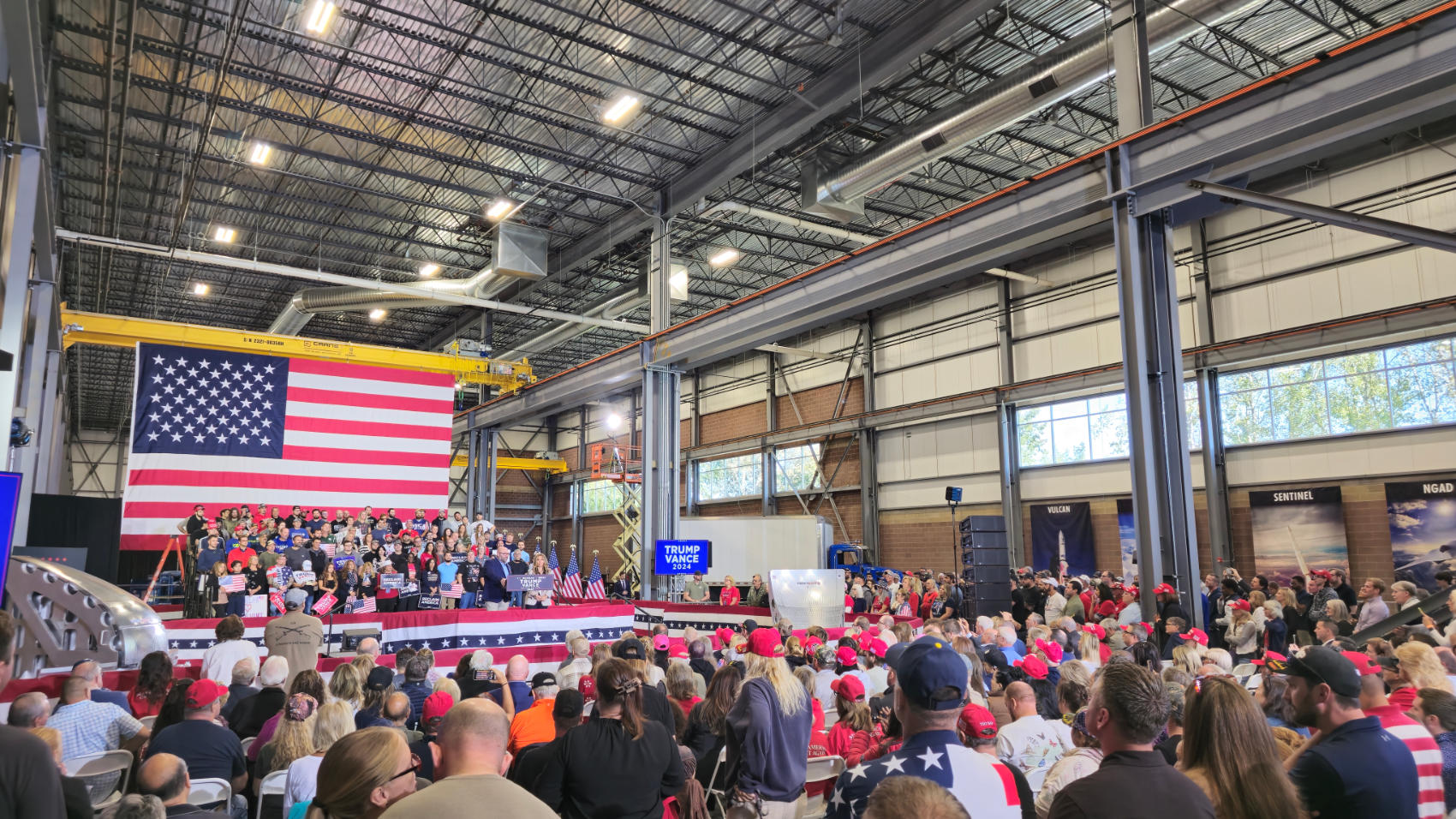
House Speaker Matt Hall and Republican leadership are advancing legislative and ballot initiatives to eliminate or severely cut property taxes. This forces Democratic candidates to defend current tax rates amidst ongoing inflation, creating a clear economic contrast for the 2026 cycle.
The Trump administration’s EPA revoked federal vehicle emissions standards, ending Biden-era EV mandates. However, Michigan Democrats remain bound by a 2023 state law requiring 100% clean energy by 2040. GOP candidates are leveraging this policy split to position themselves as defenders of the internal combustion engine and UAW jobs against Lansing's green energy mandates.
In early 2026, students at East Lansing High School organized a walkout protesting ICE enforcement, utilizing the school's PA system and receiving full authorization from district administrators. The school's "Students for Political Action Club" was advised by an English teacher who helped coordinate their efforts. In response to this publicly funded facilitation of left-wing activism, U.S. Rep. Tom Barrett’s campaign filed a FOIA request to uncover the email communications between the teacher, the students, and Democratic operatives, highlighting a push by GOP leaders to expose how public school staff are organizing anti-ICE political demonstrations during school hours.
In February 2026, hundreds of students across the Ann Arbor Public Schools district—including Pioneer, Skyline, and Community High Schools—walked out of class to march on a federal building demanding the abolition of ICE. Rather than enforcing truancy policies, district officials openly authorized the walkouts. Former and current educators publicly praised the students, marching alongside them. Critics and grassroots conservative groups are pointing to the district's official sanctioning of the protests as proof that administrators are prioritizing progressive indoctrination over keeping students in the classroom.
Following a wave of student walkouts protesting federal immigration operations, the Detroit Federation of Teachers (DFT) is weaponizing the protests to demand sweeping policy changes from the Detroit Public Schools Community District. As contract negotiations open in early 2026, union leadership is demanding the district codify its commitment as a "sanctuary district" directly into their collective bargaining agreement. The union is insisting on new contract language that mandates strict protocols to protect staff who harbor or support undocumented students from cooperating with the Trump administration's ICE enforcement efforts.
Teachers' unions (MEA and AFT) and school administrators face intense scrutiny from conservative groups for prioritizing political strikes over addressing the state's severe literacy crisis. Concurrently, DOJ investigations into Michigan districts regarding gender ideology instruction have elevated the "Parents' Rights" movement, positioning school choice and curriculum transparency as top-tier primary issues.
President Trump has threatened to block the opening of the Gordie Howe International Bridge over a trade dispute with Canada. The confrontation pits MAGA trade leverage against traditional, business-wing Republicanism, serving as a high-profile policy test for GOP primary candidates. (Notably, Mike Rogers has publicly backed the President's stance on the bridge).
The U.S. Supreme Court is actively hearing arguments on whether the fate of the Enbridge Line 5 pipeline belongs in state or federal court. The litigation acts as a sharp contrast point, with Republicans running on energy dominance and emphasizing the Whitmer-Nessel administration's willingness to jeopardize the state's energy infrastructure.

Former Detroit Mayor Mike Duggan’s serious independent gubernatorial campaign makes Michigan’s governor’s race a 3-way general election. The GOP primary field includes John James, Perry Johnson, Aric Nesbitt, Mike Cox, and Tom Leonard. Michigan Secretary of State Jocelyn Benson is the Democratic frontrunner in a primary field that includes Chris Swanson, Marni Sawicki, and Kevin Hogan.
Democratic Senator Gary Peters is retiring. Former U.S. Rep. Mike Rogers is the overwhelming GOP primary frontrunner. Rogers carries President Trump's official endorsement and is backed by a super PAC with a reported $6 million war chest. He faces a primary challenge from former MIGOP co-chair Bernadette Smith. The Democrats are engaged in a highly expensive primary featuring U.S. Rep. Haley Stevens, State Sen. Mallory McMorrow, Abdul El-Sayed, Rachel Howard, and Travis Zollner.
The Republican primary field is highly fractured, creating a mathematical scenario where the eventual nominee could win the August 4 primary with a low-20% plurality. The established tier includes U.S. Rep. John James, businessman Perry Johnson (who pledged $9 million of his own money upon entering in late January), former Attorney General Mike Cox, former House Speaker Tom Leonard, and State Senate Minority Leader Aric Nesbitt. The grassroots tier features Evan Space, Ralph Rebandt, Karla Wagner, and Joyce Gipson.
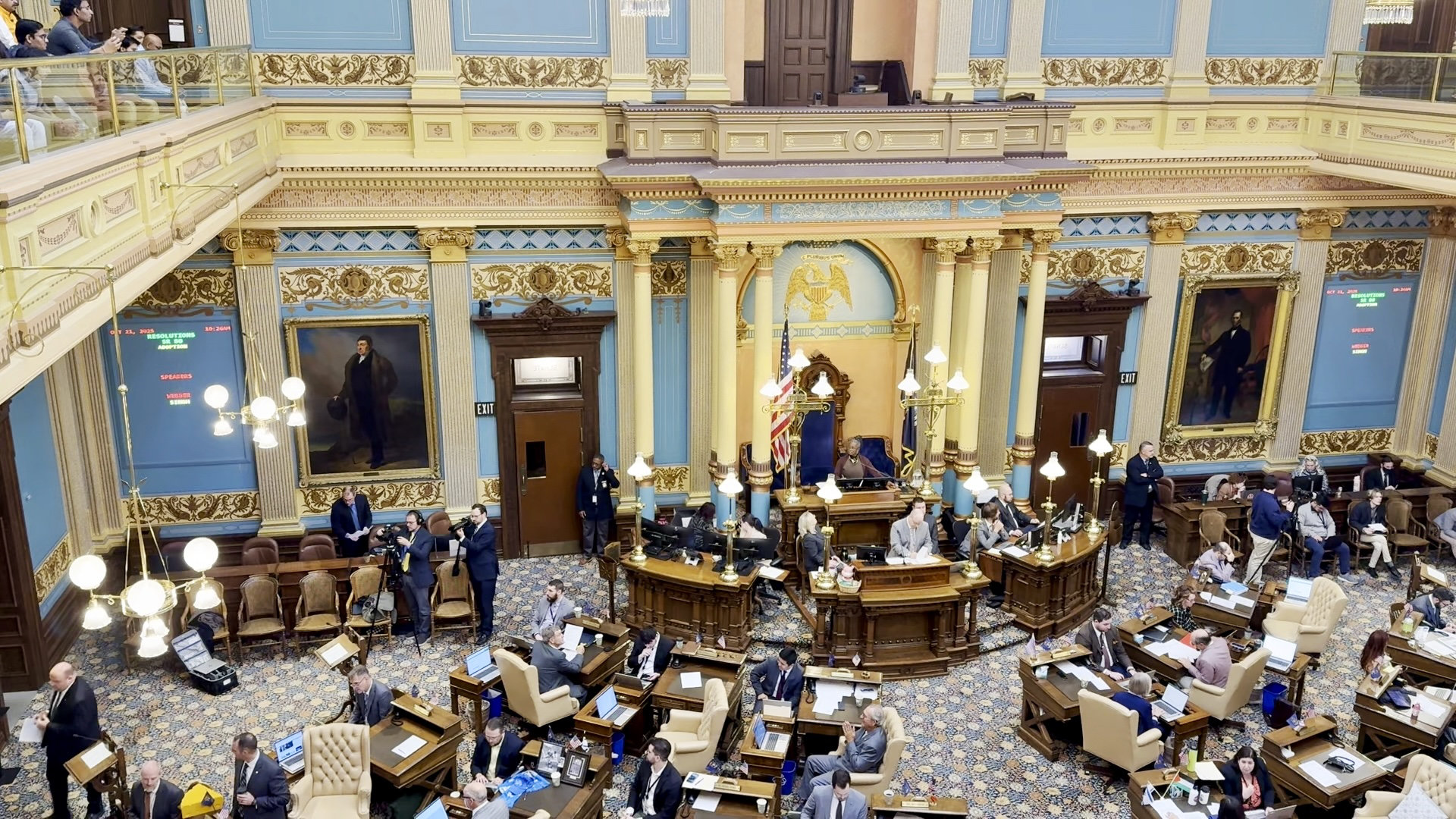
Republicans flipped the State House in 2024 and hold a 58-52 majority, keeping House Speaker Matt Hall focused on defending volatile suburban districts. Democrats hold a razor-thin 19-18 edge in the State Senate. Republicans require a net gain of just one seat to force a tie.
MI-10 (Macomb County and northern Detroit suburbs) is an open seat due to John James vacating it to run for Governor. While the district leans Republican, it remains a prime Democratic target. The GOP primary is a high-stakes financial race to lock down the working-class conservative vote in Macomb County, which is essential to the party's statewide formula.
Republican Rep. Tom Barrett flipped mid-Michigan's 7th District in 2024. He is now a freshman incumbent defending a highly competitive, evenly split bellwether seat against a coordinated Democratic spending push.
The 8th District (Flint/Saginaw) is a top-tier national GOP target. Democrat Kristen McDonald Rivet narrowly won the seat in 2024 despite President Trump carrying the district at the presidential level. Republican Amir Hassan—a Flint native, Navy veteran, and former federal law enforcement officer—is running an "America First" campaign in the GOP primary focused on restoring auto manufacturing jobs and securing the working-class vote in the Saginaw Valley.
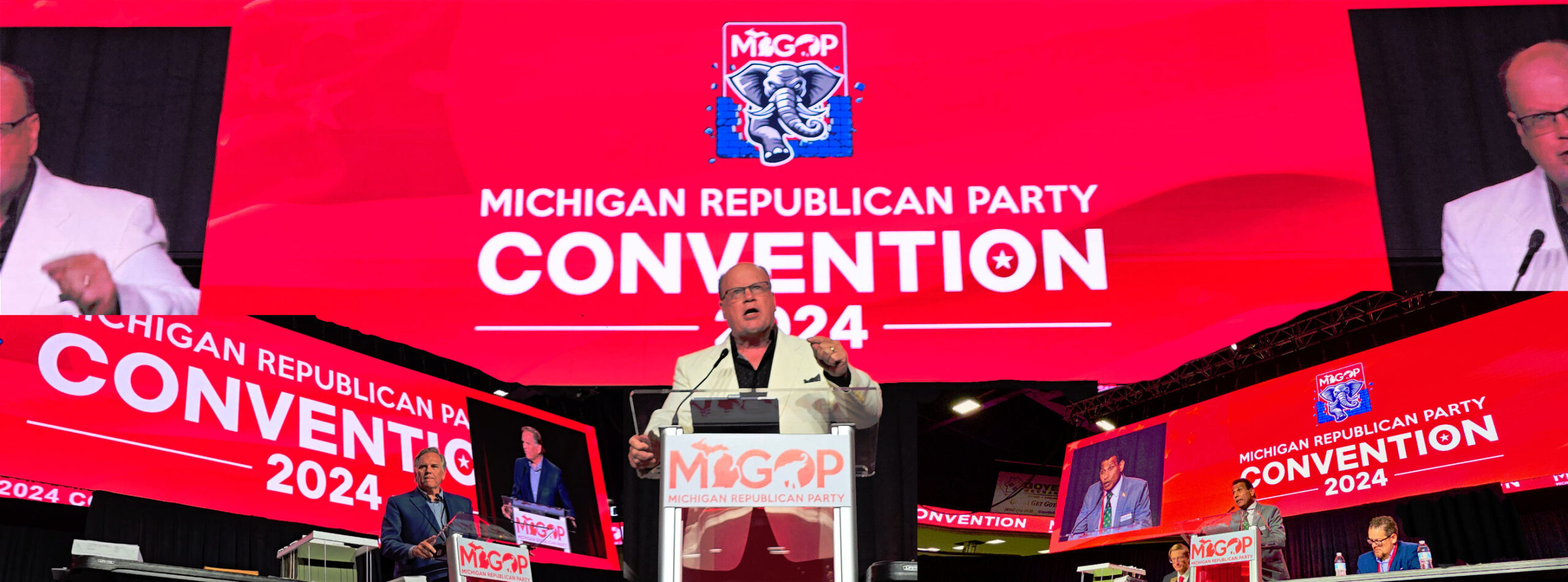
Two Michigan Supreme Court seats are on the ballot. Nominees are chosen at the state party convention. Grassroots organizers view a conservative court as an essential check on executive power and administrative overreach. The March 28 early endorsement convention also serves as a strategic pivot point for gubernatorial candidates struggling to gain traction in the primary.
Michigan law mandates an automatic ballot question every 16 years asking if the state should hold a convention to rewrite the constitution. If passed in 2026, it triggers a statewide election for convention delegates. Grassroots conservatives are actively organizing around this as a structural opportunity to bypass the legislature and enshrine strict spending limits and school choice directly into the constitution.
With Jocelyn Benson term-limited, current Democratic Lt. Gov. Garlin Gilchrist dropped out of the governor's race to clear the field and run for SOS. The Republican nominee will be chosen by delegates at the state convention. Convention delegates are prioritizing candidates who commit to implementing strict proof-of-citizenship voting requirements and comprehensive audits of the state's voter rolls.
Dana Nessel is term-limited. The GOP convention delegates are vetting candidates based on their prosecutorial priorities. The focus is strictly on candidates who pledge to drop progressive environmental litigation—like the state's crusade against the Enbridge Line 5 pipeline—and redirect resources toward prosecuting violent crime, government waste, and election fraud.
On February 9, 2026, a Macomb County jury convicted Shawn Wilmoth and Willie Reed of conducting a criminal enterprise and election law forgery. The pair orchestrated the 2022 signature fraud scheme that kept major GOP gubernatorial candidates off the ballot. Perry Johnson is citing these convictions on the trail, while election integrity advocates point to the case as proof that Michigan's signature-gathering laws remain dangerously unregulated.
Former State Rep. Beau LaFave is challenging establishment-backed incumbent State Rep. Dave Prestin in the GOP primary for the 38th State Senate District. U.S. Rep. Jack Bergman publicly endorsed LaFave, triggering immediate blowback. Prominent U.P. Republicans, including term-limited State Sen. Ed McBroom, publicly rescinded their endorsements of Bergman in retaliation.