
Bottom Line
Gabriel Lossing has the key endorsement, Matthew Bierlein has the officeholding edge, and the rest of the field is still trying to define the race
The August 4, 2026 Republican primary in Michigan Senate District 26 is an open-seat race with five filed candidates: Gabriel Lossing, Matthew Bierlein, Daltson Atwell, James M. Graham, and Candice Miller. The strongest known endorsement signal belongs to Lossing because term-limited Senator Kevin Daley endorsed him as his replacement. Bierlein is a major contender because he is already a sitting legislator with local-government experience. Atwell brings a business-owner outsider pitch, while Graham and Miller add regional and local-office context but have less visible current campaign material available to voters.
- Official field: The Michigan Bureau of Elections lists five filed Republican candidates for the August 4, 2026 primary: Gabriel Lossing, Matthew Bierlein, Daltson Atwell, James M. Graham, and Candice Miller. For a broader statewide view, see our 2026 Michigan primary election qualified candidates directory.
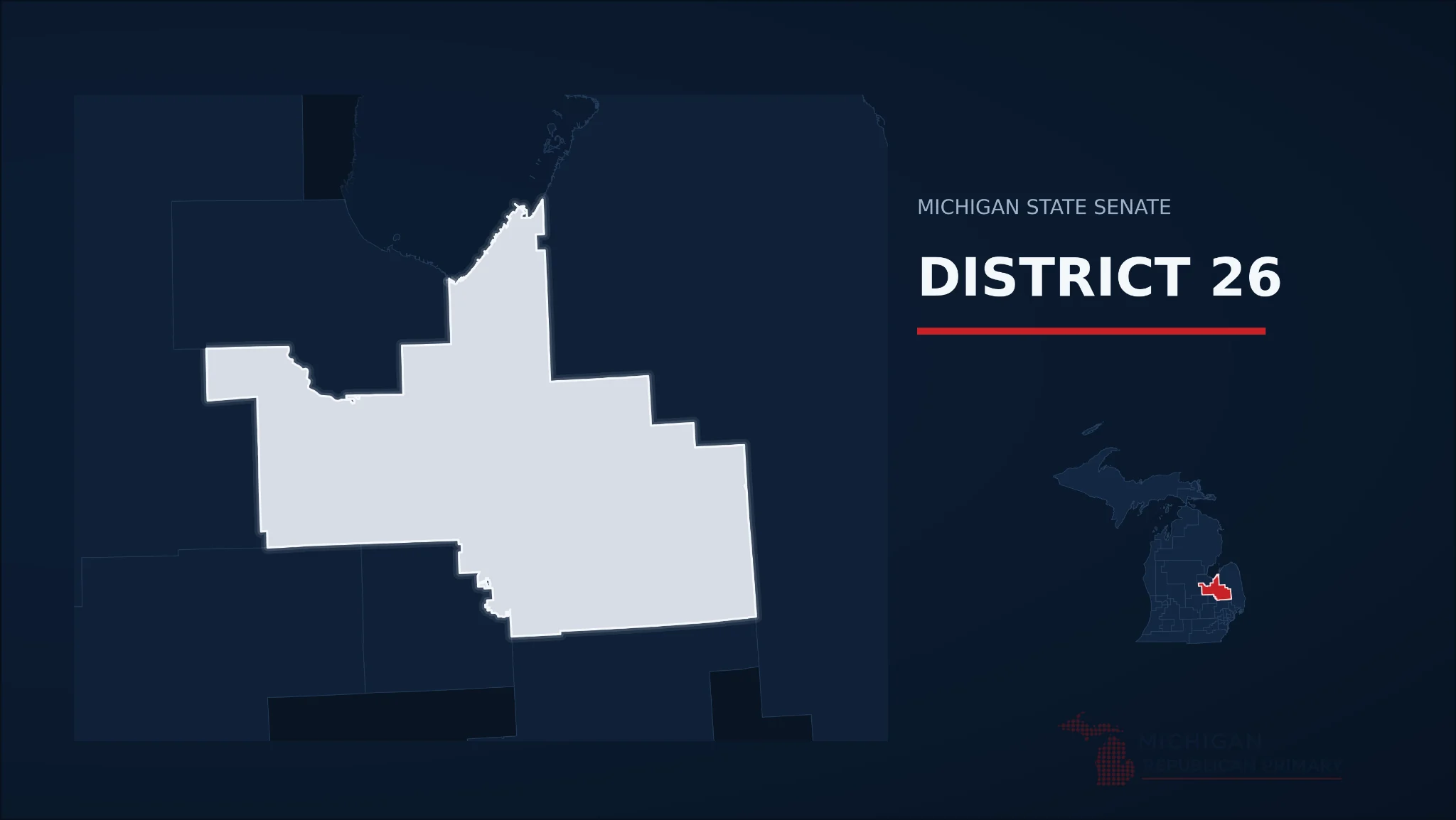
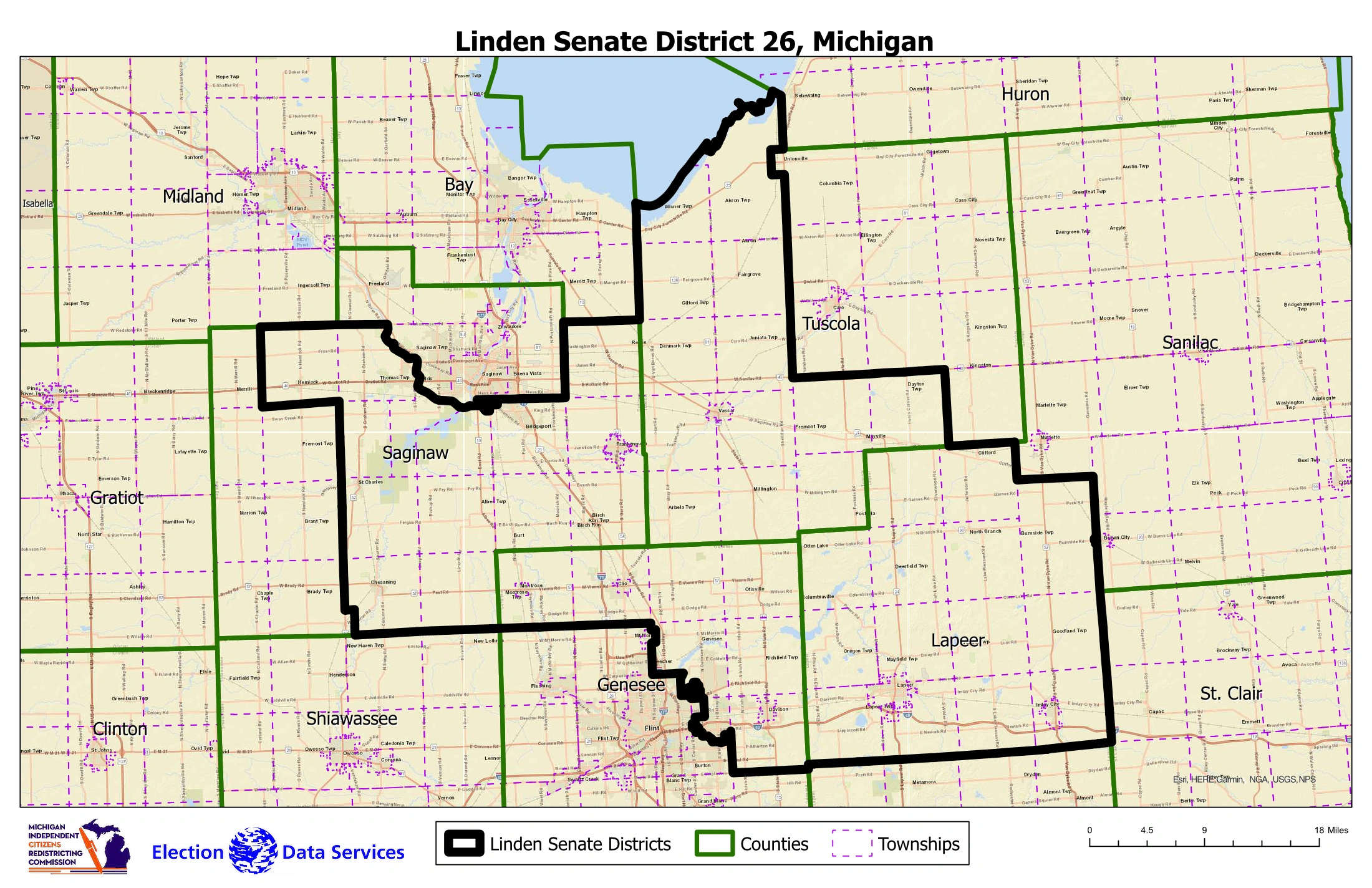
- District geography: District 26 includes portions of Genesee, Lapeer, Saginaw, and Tuscola counties. The race should be understood as a cross-county primary, not simply as a Lapeer County contest.
- Campaign finance: This analysis avoids exact finance totals for now because the key pre-primary statement closes July 19, 2026 and is due July 24, 2026.
District Composition and Profile
A Republican-leaning district crossing Lapeer, Genesee, Saginaw, and Tuscola territory
Michigan Senate District 26 sits across the Mid-Michigan and Thumb political borderland. It includes parts of Genesee, Lapeer, Saginaw, and Tuscola counties, tying together small cities, agricultural communities, exurban Genesee County precincts, and Thumb-area Republican networks.
That geography matters. Bierlein's base runs through Tuscola County and his House District 97 profile. Lossing's campaign is built around rural Lapeer County themes and carries Daley's endorsement. Atwell's campaign is rooted in Birch Run and a local business-owner message. Graham brings a Saginaw-area ballot history. Miller gives the field a Burton/Genesee County candidate with local public-service credentials.
The old shortcut of treating the seat as simply "Lapeer County" obscures how much of this contest is about regional coalition-building across county lines.
Sources: official state candidate filings, the Michigan Senate District 26 map, and Bierlein's district map page. District descriptions should be read as portions of counties, not whole-county coverage. The official district map is included below.
The Candidate Field
The filed Republican field includes five candidates
The Michigan Bureau of Elections official candidate listing for the August 4, 2026 primary shows five Republicans filed for the 26th District State Senate seat.
- Gabriel LossingFostoria
- Matthew BierleinVassar
- Daltson AtwellBirch Run
- James M. GrahamSaginaw
- Candice MillerBurton
Source: Michigan Bureau of Elections Official Candidate Listing for the August 4, 2026 primary.
Daley-Endorsed Candidate
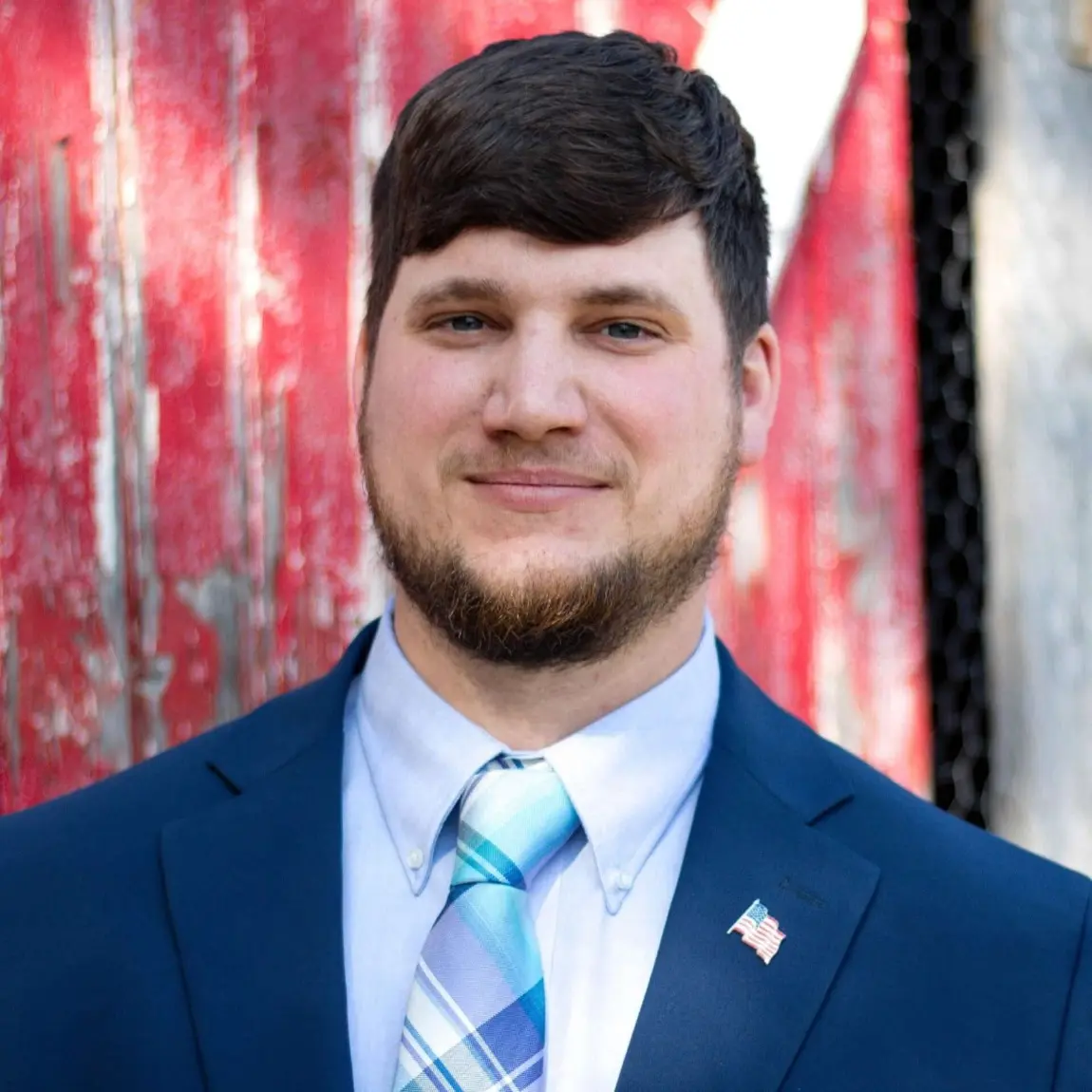
Gabriel Lossing
Lossing's campaign is built around veteran, family-farm, rural, and conservative-values themes.
Lossing's campaign site describes him as a combat veteran, first-generation farmer, husband, father of two, Lapeer County resident, and holder of an individual builder's license. His public issue framing emphasizes family farms, natural resources, hunting and fishing, nuclear family values, fiscal responsibility, and making Michigan a right-to-work state again.
The most important race signal now attached to Lossing is the Daley endorsement. Lossing's endorsement page lists State Senator Kevin Daley and includes a Daley quote endorsing him as Daley's replacement in Lansing. In an open-seat primary, that is not a cosmetic endorsement. It gives Lossing a direct claim to continuity with the term-limited incumbent.
Sources: Lossing campaign site and Lossing endorsements page.
State Representative
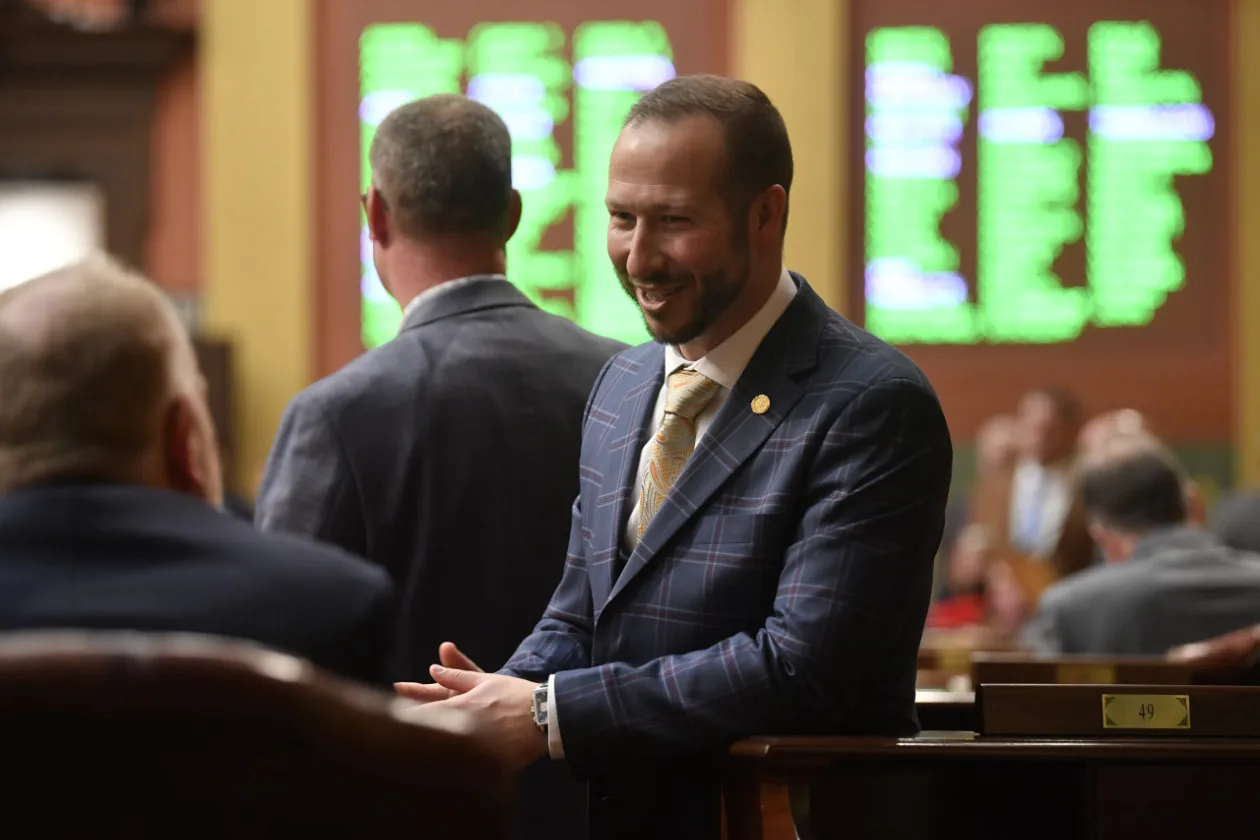
Matthew Bierlein
Bierlein has the clearest elected-office profile in the Republican field.
Bierlein serves in the Michigan House for District 97. His official House profile says he is in his second term, was elected in November 2022, serves as vice chair of the House Oversight Committee, and chairs the Oversight Subcommittee on Public Health and Food Security. His campaign biography emphasizes Tuscola County roots, manufacturing experience, service as a Tuscola County commissioner, and work as an in-district director for Sen. Kevin Daley from 2019 to 2022.
That background gives Bierlein an institutional lane: he is the candidate who can argue he already represents part of the region, knows Lansing, and has a record in office. The limit is equally clear: the incumbent senator's endorsement is not his. Daley endorsed Lossing.
Sources: Bierlein campaign site and official House profile.

Business-Owner Candidate
Daltson Atwell
Atwell's campaign centers on business ownership, affordability, energy costs, and local control.
Atwell's campaign site presents him as a Mid-Michigan small-business owner and owner of Stone Yard Landscape Center in Birch Run. His site argues that Lansing needs people who have "built something" and says more than 100 local business owners support his campaign.
His issue framing includes affordability, energy costs, support for law enforcement, parental control in education, limiting Lansing overreach, defending constitutional rights, and protecting family farms from over-regulation and development pressure. In a crowded primary, Atwell's cleanest lane is the small-business outsider case against Lansing insiders.
Sources: Atwell campaign site and Atwell supporters page.

Saginaw-Area Candidate
James M. Graham
Graham is part of the official Republican field, but his current public campaign footprint is thin.
The Bureau of Elections lists James M. Graham as a filed Republican candidate for the 26th District. Current public campaign material available to voters is limited, so Graham's profile is clearest through official ballot status and recent Saginaw County election history.
Saginaw County records do confirm recent ballot history. In the August 2024 Republican primary for Saginaw County Public Works Commissioner, Graham received 12,308 votes against write-ins. In the November 2024 general election, he was the Republican nominee and lost to Democrat Brian J. Wendling, 51,228 to 46,330.
Sources: BOE candidate listing and Saginaw County election results.
Burton / Genesee County Candidate
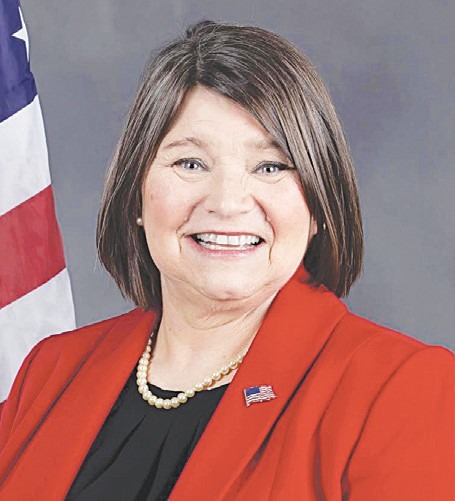
Candice Miller
Miller has local public-service credentials, though current public campaign material available to voters is limited.
The candidate in this race is Candice Miller of Burton. She should be distinguished from Candice S. Miller, the former Michigan Secretary of State and former U.S. Representative from Michigan's 10th District.
The City of Burton lists Candice Miller as a Burton City Council member, with a term expiring in November 2027. Mott Community College lists Candice Miller as secretary of the MCC Board of Trustees, says her term ends December 31, 2030, and says she was elected to the board in 2024. Current public 2026 campaign platform material is limited.
Miller also ran in the 2022 Republican primary for U.S. House District 8. Ballotpedia's certified-results page for that race shows Paul Junge winning with 42,363 votes, Matthew Seely second with 18,658 votes, and Candice Miller third with 17,879 votes, or 22.7 percent.
Sources: City of Burton profile, Mott Community College Board of Trustees, and Ballotpedia's 2022 MI-8 Republican primary results page.
Campaign Finance
Do not treat the pre-primary finance picture as complete before July 24
The campaign-finance picture is not yet complete. The most useful pre-primary reports for the August 4 primary close July 19 and are due July 24, so exact comparisons should wait until those filings are available.
Timing caveat: The key pre-primary report for candidates in the August 4, 2026 primary closes July 19 and is due July 24. The absence of a visible current number should not be treated as proof that a campaign has no financial activity.
July 19, 2026
Close of books for the August 4 primary pre-election campaign statement.
July 24, 2026
Due date for the pre-election campaign statement.
July 20-August 1, 2026
Late contribution reporting period. Contributions of $500 or more from the same source during this period must be reported within 48 hours after receipt.
September 3, 2026
Due date for the post-primary campaign statement, which closes August 24.
- Search candidate committees through the Michigan Transparency Network committee search.
- Use the contribution search, expenditure search, and all-transactions report for deeper review.
- Check the report period and close-of-books date before comparing candidates. The official portal is the source of record, but it is not reader-friendly.
- Official calendar source: Michigan campaign-finance filing dates.
Endorsement Landscape
Daley's endorsement is the central known endorsement signal
Endorsements matter in an open-seat primary because they tell activists, donors, and local officials which candidate has earned trust inside existing Republican networks. The most important known endorsement in this race is Daley's support for Lossing.
Incumbent Endorsement
Gabriel Lossing
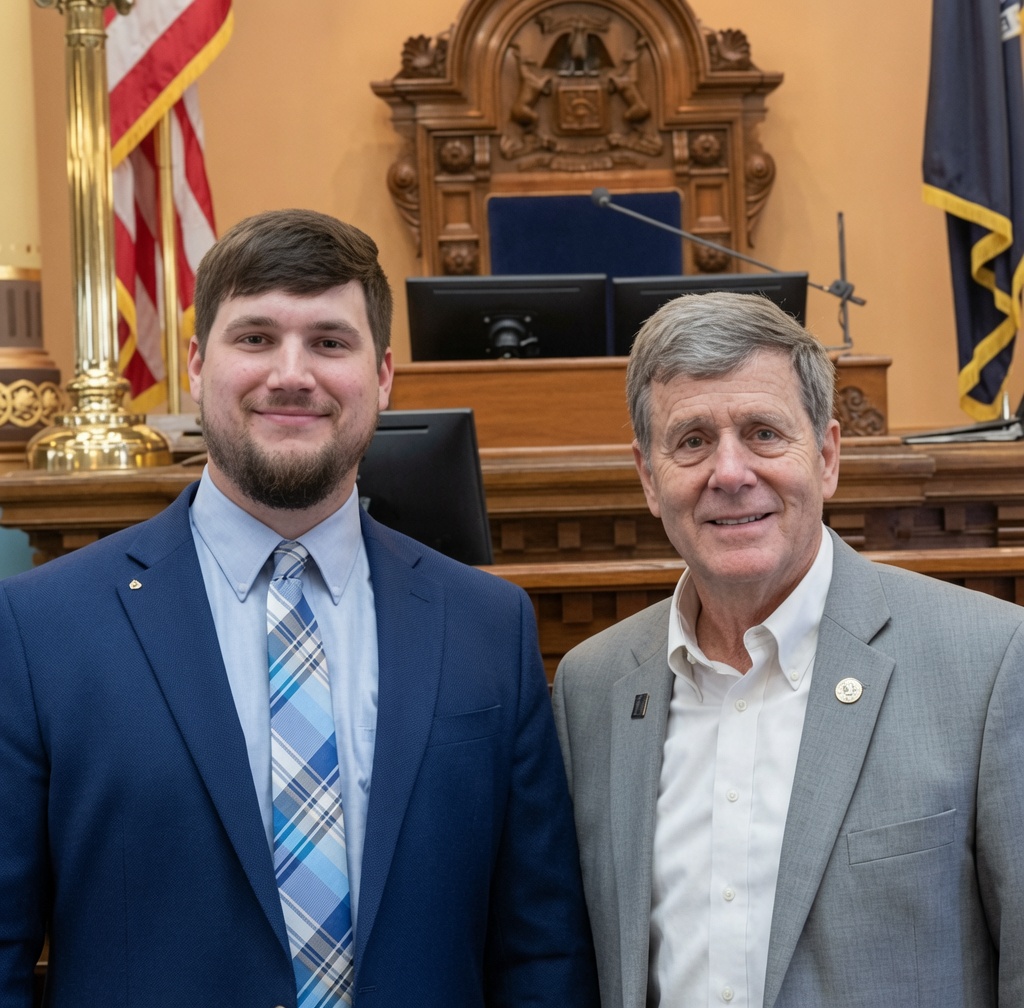
- State Senator Kevin Daley
- Deerfield Township Supervisor Keith Merser
- Michigan Freedom Network Freedom Approved
- Tuscola County Commissioner Bill Lutz
- Right to Life of Michigan
- Arbela Township Supervisor Hunt
Bierlein Context
Matthew Bierlein
Bierlein's strength is his public-office profile: sitting legislator, former Tuscola County commissioner, and former in-district director for Sen. Kevin Daley.
- Sitting state representative
- Former Tuscola County commissioner
- Former in-district director for Sen. Kevin Daley
Business Supporter List
Daltson Atwell
Atwell's campaign site says more than 100 local business owners support his campaign and publishes a long supporter list by business category.
- Construction, excavation, and trades businesses
- Landscaping and outdoor-service businesses
- Automotive, towing, retail, agriculture, and professional-service businesses
Race Analysis
Each candidate has a different route to relevance
The field is not symmetrical. Some candidates have stronger public profiles, some have clearer geography, and some have more developed current campaign material available to voters.
Lossing
The Daley-continuity and rural-values lane
Lossing's rural biography and Daley endorsement give him a strong identity in the race. His task is to turn that signal into broader organization across all four counties.
Bierlein
The institutional lane
Bierlein can run as the experienced legislator with a record, a district-adjacent House base, and local-government credentials. His challenge is that the term-limited senator's endorsement gives Lossing a direct succession argument.
Atwell
The outsider business lane
Atwell is making a small-business, affordability, energy-cost, and local-control argument. His supporter list gives him a visible grassroots-business angle.
Graham and Miller
The limited-footprint problem
Graham and Miller are both official filed candidates, but their current public campaign footprints are less developed than the leading candidate profiles. Their relevance comes from ballot status, geography, and prior public-service or election history.
Procedural Timeline
The filing deadline has passed, but the finance picture is still unfolding
The candidate field is set for the primary, but the campaign-finance record will become more meaningful after the July pre-election filing deadline.
April 21, 2026
Candidate filing deadline for the August 4, 2026 primary.
July 24, 2026
Pre-primary campaign-finance statements due for the August 4 primary.
August 4, 2026
Republican primary election.
November 3, 2026
General election.
The full filed candidate list is also available on our qualified candidates page.
Selected Race Coverage
Local coverage of the Senate District 26 race
The race has received limited but useful local coverage, especially around candidate announcements, filing coverage, and early campaign framing.
- Sanilac Broadcasting: State Rep. Bierlein announces candidacy for Michigan's 26th District Senate seat (Jan. 7, 2026).
- Michigan's Thumb: Matthew Bierlein announces bid for Michigan's 26th Senate District (Jan. 15, 2026).
- ABC12/WJRT: Small business owner from Birch Run campaigning for Michigan Senate (public video mirror, Jan. 19, 2026).
- Michigan's Thumb: Gabriel Lossing launches bid for open Michigan 26th District state Senate seat (Jan. 28, 2026).
- WNEM: Candidates in the running for 26th state senate district seat (Jan. 30, 2026).
- Genesee County View: Candidates file by April 21 deadline for primary election (candidate filing coverage).
Official District Map
The official Senate District 26 map
The map below is included as a source reference for the district boundaries discussed in this analysis.
Conclusion
The race should be covered as a live five-candidate primary
The Republican primary in Senate District 26 is not just a contest between an officeholder and one challenger. It is a five-candidate open-seat race in which geography, name identification, local-office history, campaign visibility, and endorsements all matter.
The most important known endorsement signal belongs to Gabriel Lossing because Senator Kevin Daley endorsed him as his preferred replacement. Bierlein remains a serious candidate because of his House service and local-government background. Atwell has a visible business-owner lane. Graham and Miller remain part of the field through ballot status, geography, and public-service or election history.