
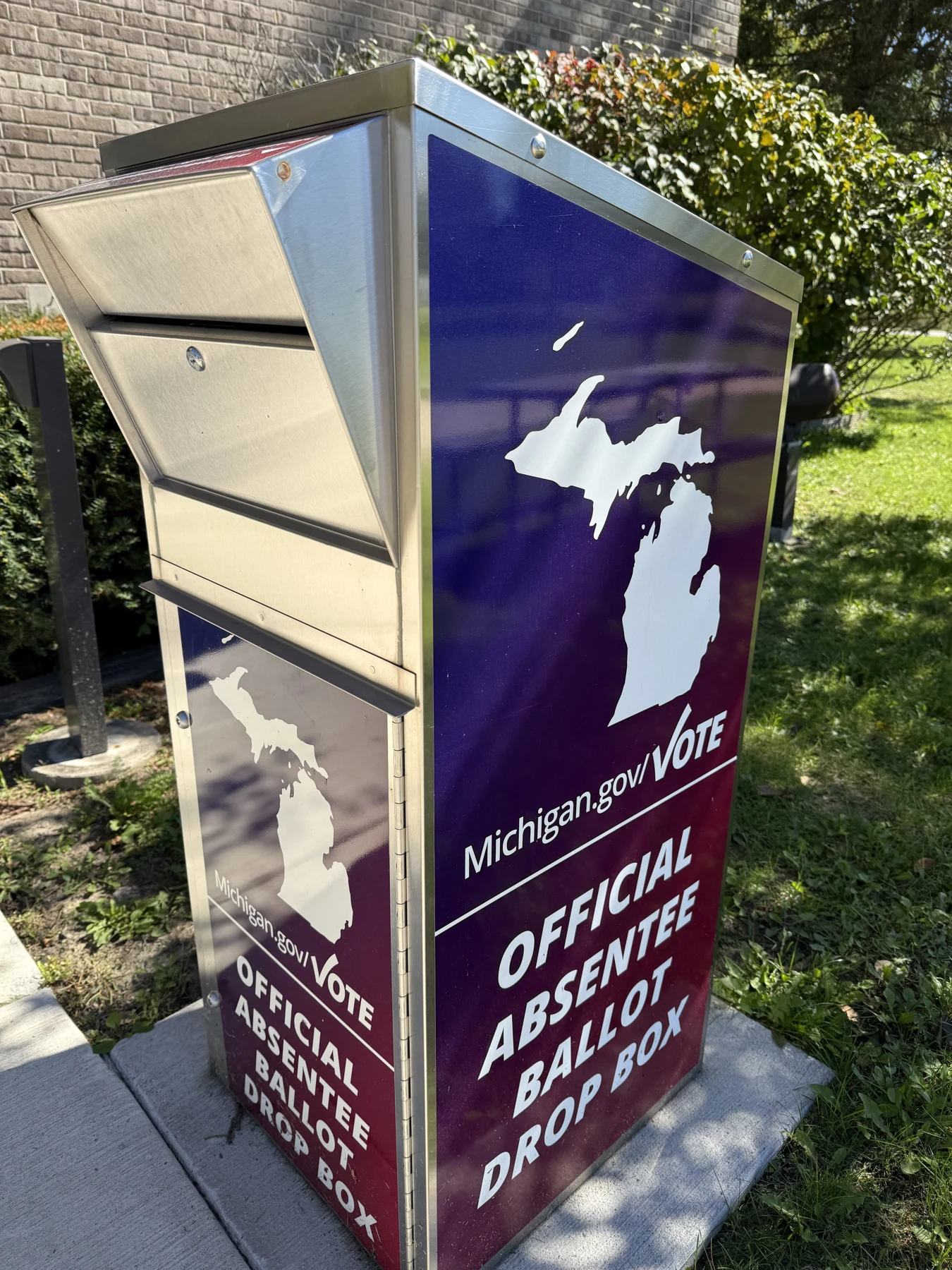
An official absentee ballot drop box displaying the Michigan outline.
News & analysisMichigan · 2026

Michigan’s 2026 ballot-chasing debate centers on timing, data, and voter contact.

Analysis and voter information | By Stephen Schumacher | September 27, 2026

Absentee voting began September 24 for Michigan’s November 3 general election. The calendar helps explain the Republican discussion about ballot chasing, the work described by party organizations, and the election records campaigns use to follow participation.

Michigan’s November election is already in its voting period. Absentee ballots became available September 24, giving voters an opportunity to complete and return them weeks before Election Day. Early in-person voting follows on a separate schedule.

That timing is central to the discussion among Republicans about absentee ballot chasing: contacting voters about ballots they have requested or received and following their status through return. Oakland County Republican Party Chair Vance Patrick has described his county’s outreach and called for greater statewide urgency. Michigan Republican Party Chair Jim Runestad has publicly supported early and absentee voting, and the party advertises a statewide field program.

The calendar governs when voters can act. Public election records show participation, while campaigns maintain their own contact histories. Together, those records help explain the work being discussed and the limits of what outsiders can measure.

The voting calendar

Michigan voters face separate deadlines for registration, ballot requests, and ballot returns.

The following dates apply to the November 3, 2026 general election. The Department of State’s calendar establishes the legal milestones; its absentee-voting guidance also recommends allowing time for mail delivery.

Michigan general-election voting dates
DateWhat it means
September 19Military/overseas ballot issuance deadline for qualifying applications received at least 45 days before the election.
September 24Absentee ballots available for issuance. Local ballot drop boxes become accessible around the clock.
October 5Optional local early in-person voting may begin.
October 19Last day to register online or by mail. Also the recommended date to request a mailed absentee ballot, allowing at least 15 days.
October 20Recommended latest date to mail a completed ballot under the state’s two-week guidance. Registration now requires visiting the local clerk with residency proof.
October 24–November 1Required statewide early in-person voting period.
October 30, 5 p.m.Deadline to apply online for an absentee ballot or for a mailed application to reach the clerk.
November 2, 4 p.m.In-person absentee application deadline for voters already registered at their current address.
November 3, 8 p.m.Most completed absentee ballots must reach the local clerk or the correct local drop box. Polls open at 7 a.m.
November 6, 5 p.m.Deadline to correct an eligible signature problem on an otherwise valid absentee return envelope.
November 9Qualifying military/overseas ballots may arrive if postmarked by Election Day.

The recommended mailing dates are earlier than the legal deadlines. For most voters, an Election Day postmark does not satisfy the November 3 receipt requirement. The signature-correction deadline does not extend that ordinary receipt deadline. Official absentee instructions, military and overseas rules.

Local schedules also matter. Communities may offer early in-person voting beyond the required nine days, including November 2 until 4 p.m. Voting an absentee ballot at a clerk’s office is a different process from inserting a ballot into a tabulator at an assigned early-voting site. Check the local schedule and location at Michigan.gov/Vote. Early-voting guidance.

Eligible residents who need to register or update their address can still do so in person at their city or township clerk’s office through Election Day, with proof of residency. Those in line by 8 p.m. can register and vote. Registration instructions.

Patrick and Runestad have both publicly supported voting before Election Day.

Patrick’s September 24 post described an Oakland Republican voter guide timed to ballot delivery and digital advertising he said was already reaching absentee voters. Texts, calls, and door knocks were prepared, he wrote. His criticism of state-party priorities accompanied a specific account of county work.

An August 26 post described another part of that role: providing campaigns with access to voter data, training, and common resources. It presents the county organization as a provider of infrastructure as well as a source of voter communications.

Runestad has also made his position clear. Discussing the 2026 election with POLITICO in December 2025, he said, “we’ll be fully engaged in early and absentee voting — we have to be.” The same report described Monroe County Republican efforts to promote permanent absentee ballot enrollment. POLITICO’s reporting.

MIGOP’s September 24 volunteer appeal encouraged door knocking and calls. Its field and training page identifies regional leadership and explains how county organizations can coordinate events and training. The field-program section carries an RNC payment disclaimer.

These accounts concern organizations with different responsibilities. County parties, campaigns, state and national committees, and outside groups may all communicate with voters. Their published accounts describe programs and priorities, but do not provide comparable measures of completed contacts or additional ballots returned because of those contacts.

Kevin Kijewski and other Republican voices have emphasized the decisions voters make before November.

Kevin Kijewski raised the timing issue shortly after the primary. In an August 7 post, he argued that candidates needed to give voters affirmative reasons for support and warned against postponing that work: “Whoever waits for October will be talking to people who already voted.” His post distinguished the military and overseas schedule from ordinary absentee availability.

John James encouraged absentee voting on September 24. Tony Forlini had also emphasized that voters would make decisions before Election Day. Together, these statements show that the discussion extends beyond party administration to candidates’ own communication with voters.

Dennis Lennox’s September 24 account supplied a different perspective: his household had not received a Republican text that day. He also acknowledged earlier Americans for Prosperity mail supporting Republican candidates. His experience helps explain the discussion about timing, while remaining one household’s account.

The underlying debate has a history. Bridge Michigan reported in September 2024 on Republican efforts to promote absentee voting while navigating conflicting messages about the practice. The current statements show several Republican figures affirmatively encouraging participation before Election Day.
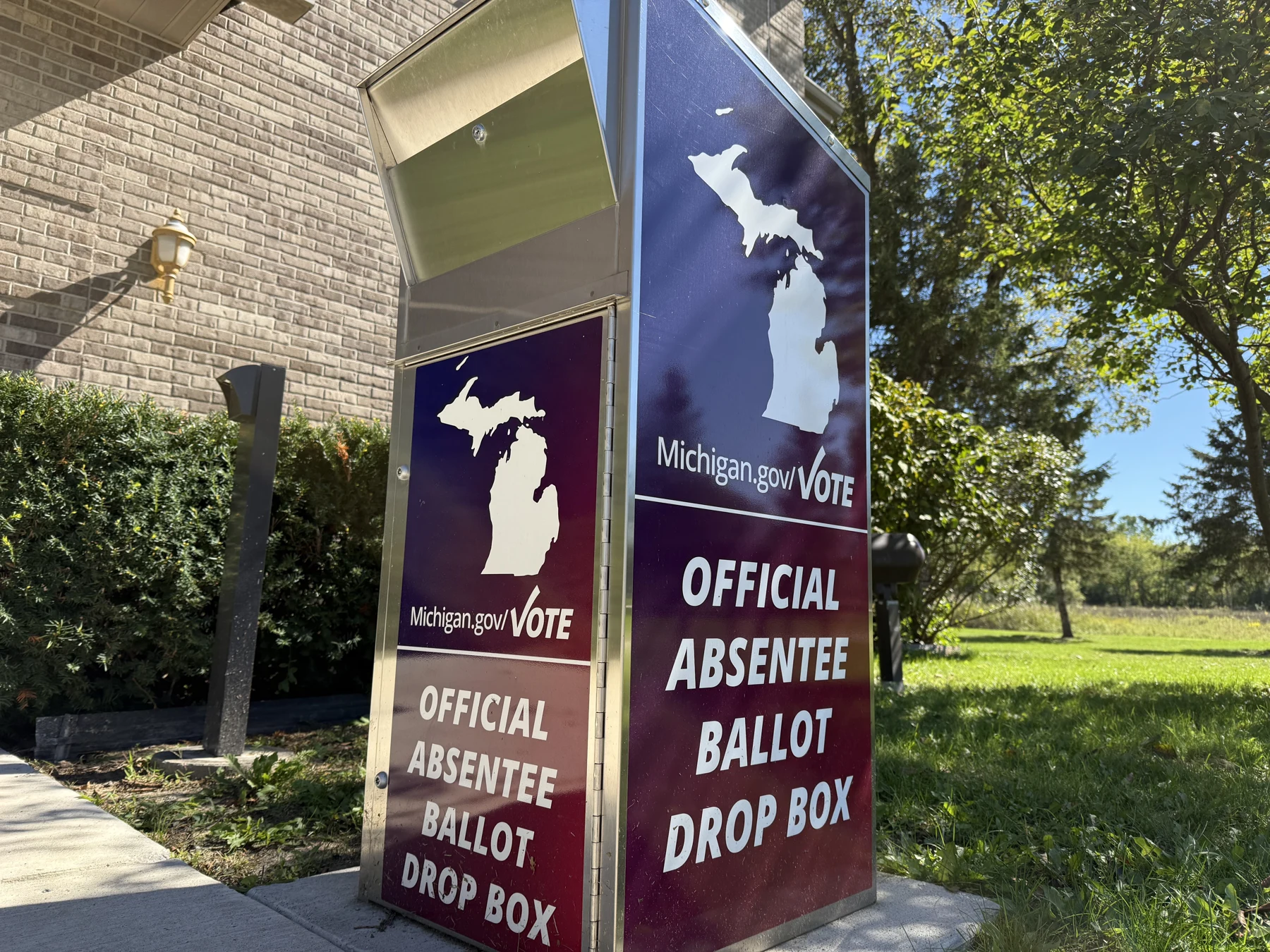
The Michigan outline and official absentee ballot drop-box lettering on the box’s front and side.
Official absentee ballot drop box.

The Senate primary and open-primary rules complicate comparisons of party turnout.

Comparisons between Republican and Democratic gubernatorial-primary totals need to account for the other contests on each side of the ballot. The Democratic U.S. Senate primary attracted exceptional advertising and national attention. In a July 31 analysis, AdImpact reported $80.8 million in advertising supporting Democratic Senate candidates. Its report tracks advertising spending and reservations, rather than all campaign expenditures. University of Michigan lecturer Rusty Hills subsequently described the contest as the most expensive Democratic U.S. Senate primary in history. U-M interview.

That competition helps explain participation. Michigan State University political scientist Corwin Smidt told Michigan Advance that voters were animated to support or oppose Abdul El-Sayed. Consultant Andrea Bitely likewise pointed to the prominence of the Senate contest when explaining why the raw party totals overstated the difference in enthusiasm heading into November. These are explanations of turnout, not measurements of how many votes advertising produced. Michigan Advance’s post-primary analysis.

Michigan’s August primary is open: voters do not register by party and may choose either party’s primary, but must keep their partisan selections within one party column. A voter who ordinarily supports Republicans could therefore vote in the Democratic Senate contest while forgoing the Republican gubernatorial primary. Michigan voting rules.

There was documented Republican interest in the Democratic nominee. Before the primary, strategist Jason Roe told Michigan Advance that he hoped El-Sayed would win because he considered him a more favorable opponent for Mike Rogers. That establishes a strategic preference; it does not count voters who acted on it. The available results do not establish how many Republicans crossed over, whom they supported, or why. Roe’s remarks.

The primary totals consequently cannot be read as a count of November Republicans who failed to vote. The site’s primary-results coverage records the outcomes; participation, party identification, and general-election intentions are separate questions.

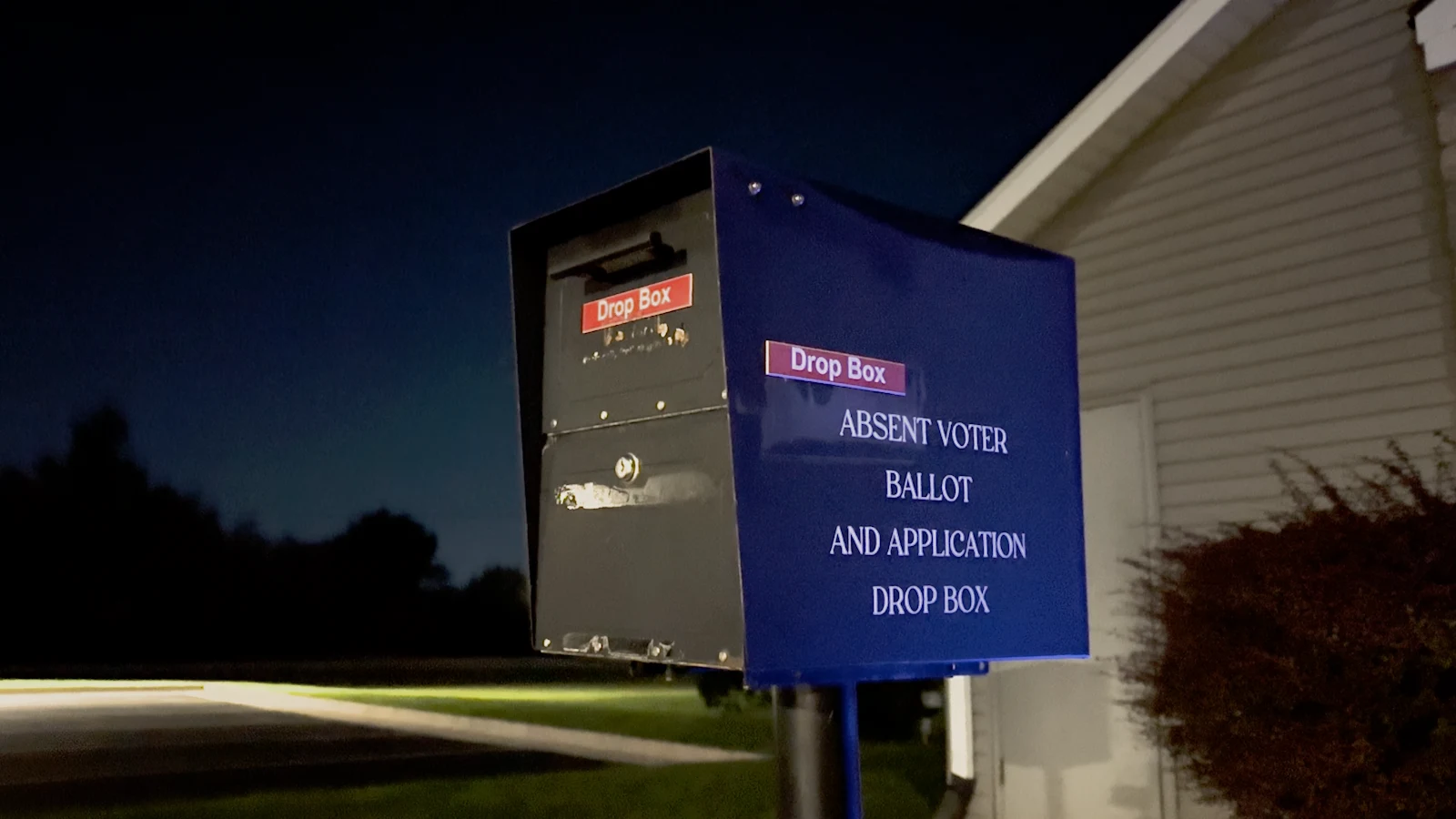
A Michigan absentee ballot drop box illuminated at night.
A blue absentee ballot drop box against the night sky.
Ballot chasing

Organized ballot chasing combines election records with documented voter contact.

An absentee ballot passes through several observable stages: application, issuance, return, and review by election officials. Ballot chasing uses information about those stages to support communication with voters. A mailing announcing absentee availability and a follow-up about an issued ballot serve different purposes.

An organized operation connects that election information with records of its own work. Those records can show whether a call was attempted, a conversation occurred, a voter reported a missing ballot, or assistance from the clerk was requested. They also distinguish completed work from scheduled contacts and show when the underlying ballot information was updated.

In a July 29 WKAR interview, Grassroots Midwest’s Adrian Hemond described campaigns monitoring who had already voted and adjusting subsequent communications. This helps explain why ballot-return information is valuable even though it reveals nothing about the voter’s selections.

There are limits to what operational totals establish. Contact attempts, conversations, ballot returns, and additional votes caused by outreach are different measures. Returned ballots may include people who would have voted without any campaign contact.

Ballot chasing also does not confer authority to collect another person’s ballot. Michigan restricts who may return one on a voter’s behalf. A campaign reminder and the physical return of a voted ballot are separate activities governed by different rules. Official return guidance.

State records show participation, while campaigns supply their own contact information and assessments.

Michigan’s Qualified Voter File supports election administration. Public releases provide specified information from that system; they do not give recipients unrestricted access to the administrative database.

The Department of State’s public-records catalog distinguishes monthly registration and history files from daily election-period reports. Its offerings include issued ballots not yet recorded as returned, returned-ballot records, and application/sent/received status. It separately identifies permanent absentee ballot and permanent absentee application lists.

State election records and separately maintained campaign information
State records can establishCampaigns or vendors obtain or build separately
Registration address, jurisdiction, and precinctTelephone and email matches
Participation in previous electionsRecords of conversations and contact attempts
Permanent absentee ballot enrollmentVolunteered candidate preferences and campaign assessments
Recorded application, issuance, and return statusAssignments, follow-up notes, and opt-out records

The state’s QVF request form describes available requests and possible charges. Public releases exclude telephone numbers, email addresses, signatures, and protected identification information. A commercial file may combine public records with information from other sources, so its additional fields should not be mistaken for official state findings.

A candidate-preference label is particularly different from an election record. Michigan does not register voters by party. A recorded presidential-primary ballot selection is not a statement of how that person voted in a general election. Department of State explanation.

Daily reports also do not mean every campaign immediately receives or incorporates a new return. Election-office processing, a campaign’s update schedule, and already scheduled communications can leave a gap between voting and the end of reminders.

Research shows that ballot-chase effectiveness depends on the setting.

Some programs have measured an effect directly. VoteAmerica’s evaluation of its 2020 text-message program used a randomly assigned comparison group. In states that automatically mailed absentee applications, message recipients were 0.97 percentage point more likely to submit a ballot. Other groups of states did not show a statistically significant effect. The finding supports a specific result under those conditions, rather than a universal estimate for ballot chasing.

Election experience provides another kind of evidence. POLITICO reported that Republicans’ share of Pennsylvania mail ballots increased from 23.7% in 2020 to 32.4% in 2024 amid substantial efforts to promote the method. Republicans won the state in the latter presidential election. Those developments show a larger Republican share of mail voting during a successful cycle, but do not isolate how much one outreach program changed turnout or the result.

Michigan practitioners publish services and explanations relevant to absentee voting.

Ben Greene’s Northland Strategies lists absentee and early-vote strategy, voter-file management, and field work among its services.

Grassroots Midwest, a bipartisan Michigan firm, provides another practitioner perspective. Hemond’s WKAR explanation is useful for understanding how campaigns use participation information during the voting period.

Advanced Campaign Technologies lists database management, email marketing, graphic design, and website development. A 2024 public filing identifies Jon Chulski as its owner. Its public website provides a contact point but does not detail an absentee-chase service or publish measured results.

These resources illustrate relevant work available in Michigan. They are a selection of published information, not an exhaustive list or a ranking of providers.

Voters can check ballot status and resolve problems through their local clerk.

Michigan.gov/Vote is the starting point for checking registration, locating the clerk, and following an absentee ballot. The tracker shows when a ballot was mailed and recorded as received. If delivery or receipt appears delayed, contact the clerk. The state notes that this absentee tracker does not update when an absentee ballot is inserted directly into a tabulator at an early-voting site or Election Day polling place. Ballot-tracking instructions.

Permanent absentee ballot enrollment means a ballot is mailed automatically for eligible elections; it differs from a list that sends an application. Voters still need current registration and an accurate mailing arrangement with their clerk. State election fact center.

Signature problems and ballot replacements require attention to their particular rules. The November 6 cure deadline concerns an otherwise valid return envelope. Changing a vote after returning a ballot has an earlier deadline: a written, signed request must reach the clerk by October 23 at 5 p.m. A ballot already tabulated at an early-voting site cannot be changed. Official calendar, voting questions and answers.

For most absentee voters, the decisive deadline remains receipt by the correct local election office or drop box by 8 p.m. November 3. The site’s 2026 general-election guide provides additional election context.

Election instructions and linked reporting were reviewed September 26, 2026. Campaign and party descriptions are attributed to their speakers or published materials. The article does not estimate the number of additional votes generated by any Michigan organization.

An absentee ballot drop box and its surroundings at night.
Michigan.gov/Vote Registration · Local clerk · Ballot status